
Image [cc] anti_christa

Friday morning I stumbled into an interesting Twitter conversation between Jeffrey Brandt (Pinhawk guru), Nicole Black (Mycase.com and Cloud Computing for Lawyers), and – I assume – Andrea Cannavina (LegalTypist), tweeting as @LegalTypist. As I often do, I jumped in mid-conversation, completely uninvited, and offered my opinions. The topic was Innovation vs. Security and the tweet that caught my eye was Jeffrey saying, “My biggest fear is that firms will relax their standards to support iThings, and some young lawyer will bypass more traditional tools causing their client to get hosed.”*

Of course Jeffrey is completely right.  That would be a terrible outcome resulting from security standards being relaxed simply to support the latest and greatest new-fangled gadget.  However, as an hopelessly progressive technologist, who regularly finds himself in the midst of this very battle, I had to offer the counter argument.

“How about firms who stick to rigid, outdated standards and then fail to meet their clients’ needs?”, I asked.

The 140 character limit on Twitter is both it’s salvation and it’s undoing.  Nuance and subtlety are impossible and my comment got @LegalTypist a bit riled.**

“A firm that fails to use the latest and greatest technology does not automatically fail to meet their clients needs. But a firm that fails to protect client data…”* She left the sentence dangling there like a fish, but I knew what she meant, and she was also completely right.

Security, especially of client data, is always of the utmost importance.  You will get no argument from me.

BUT, (and this is not a new revelation) security is also always a trade off.  Your million dollar diamond bracelet is highly secure in it’s safe deposit box, but if you ever care to wear it you will be forced to diminish its security, at least temporarily. Data is like that bracelet. If you want USE it, you risk losing exclusive control over it. If you’re happy just knowing that you own it, you can leave it locked up somewhere safe and never take it out. Unlike the bracelet, however, if you don’t make your client’s data easily accessible to those who need access to it via the tools they are likely to have with them when they need to access it, then the value of that data diminishes for both you and for your client.

The assumption in Jeffrey Brandt’s scenario is that both traditional tools and iThings are readily available and the young lawyer chooses the less secure option. Leaving aside for the moment whether an iThing is indeed less secure than more traditional tools, the problem here is not the technology, but the young lawyer’s decision making skills.  If we change the scenario just a bit and suggest that the young lawyer is out and about spending his year end bonus when he receives an urgent request from a client, then what is the value of having client data accessible via iThings? The alternative is for the young lawyer to seek out a public library to log in to a remote portal, or to hunt down a colleague with immediate access to a computer, or to talk his secretary, spouse, or <shudder> child through the task of meeting the client’s needs over the phone. Any of these options would be more time consuming and  less secure (except maybe the colleague scenario) than simply accessing the client’s data securely through the iThing. The value to the client is much more concrete.  How much will the young attorney bill for his time and services in each scenario?

As I tweeted in response to @LegalTypist, “I am not arguing that ALL technology is good, or that we should ever put client data at undue risk, but we can’t fail to innovate the practice of law in the name of securing data.”*

It is a different technological world than it was just a few short years ago.  Today there are vendors providing consumer-like services with enterprise level (and beyond) security. You may have evaluated consumer technology options a year ago and decided that they were inappropriate for your practice, but that information is woefully outdated and you should probably re-evaluate.  I am ultimately arguing for broader, more flexible technology usage policies that incorporate the concept of “good judgment” (radical, I know) and can accommodate the rapid change of technology.  Or at the very least, I would hope for much shorter review periods for such policies.

And, as usual, this little rant probably has nothing to do with what Jeffrey, Nicole, and Andrea were actually talking about and I simply hijacked it to make my own point.

Sorry guys.


*Twitter-ese translations are mine.
**Attributions of emotion are mine as well.
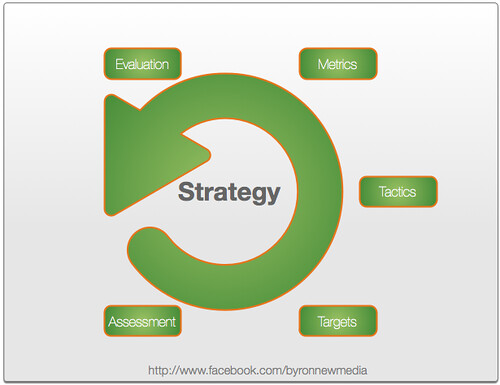
Image [cc] ByronNewMedia

While prepping for a workshop on this morning, I began to think about the types of business development, client relations and competitive intelligence questions that are commonly asked at law firms, and how they tend to almost always be reactive in nature. Take the question of a partner coming to the development/intelligence team and asking:

We are looking at bringing in Bob Smith from Mega-Firm, LLC, can you check him out for us?

What this question is actually saying is this:

We’ve already made a lot of decisions on bringing in this guy Bob Smith from Mega-Firm, LLC. We’ve done a bit of investigation (read: one of us worked with him a while back), but we thought we’d get a bit of verification that he’s an okay lawyer and will fit into the firm. That way, if he doesn’t work out, we can point to your report and cover our you-know-what and say that we “properly vetted” him. So, can you check him out for us?

Maybe that’s a bit over the top, but you can see that bringing in your development and intelligence (D&I) teams this late into the process shows that either your D&I teams aren’t part of the overall strategic goals of your firm, or the strategy wasn’t considered properly when the decision was made to bring in Bob Smith as a lateral hire.

So, what’s the proper question? Part of that answer isn’t so much about the question itself, but rather, at what point in the process is a question presented to your D&I teams? If the D&I teams are really a part of the firm’s strategic operations, the question needs to be asked before Bob’s name is even in the running as a lateral hire. If the D&I teams are part of the process, Bob may never have even entered into the equation at all. A more strategic question to ask might be this:

We are looking to beef up our IP Litigation practice in the Northwest United States, what potential clients are out there for that region, and who do we have within the firm to handle this initiative? If we don’t have someone in the firm, who would be the top five laterals we should be looking for to help us accomplish this objective?

One of the primary purposes of having development and intelligence professionals is to help put your firm on at a competitive advantage over peer firms. So, if the strategic goal is to “beef up” a practice in a certain geographic area, then the D&I teams’ purpose is to analyze the competition in that area, determine who are the main players, the trends forecasted for this type of legal practice, and what it would take to make our firm better than what exists in that region. This purpose cannot be obtained when they are left out of the intial strategy.

Oh joy!! Just when you thought that LexisNexis acquiring Knowledge Mosaic was the big legal publishing news of the day. Along comes Thomson Reuters to one-up them. Practical Law Company (PLC) just sent out the news that they’ve been acquired by Thomson Reuters (TR). Everyone I’ve talked to in the past hour has groaned about this announcement, as TR is notorious for acquiring good companies and then chasing out all the talented people associated with that company (think: GSI).

Good luck to the folks at PLC (as it seems the news was a bit of a shocker for them, too.)

Here’s the press release. (Now to sit back and wait to see if Bloomberg has something to tell us today… )

I am delighted to let you know that today we announced that we have entered into a definitive agreement for Thomson Reuters, the world’s leading source of intelligent information for businesses and professionals, to acquire Practical Law Company. I wanted to share this news with you as a valued subscriber. You can learn more in the news release and FAQ.

Thomson Reuters is a great home for Practical Law Company. We share many values with Thomson Reuters, most notably a passion for innovation in the legal marketplace and for providing lawyers with the best possible resources so that they can spend more time delivering value for clients and less time reinventing the wheel. We also share a commitment to helping our subscribers respond to client demands to work faster and smarter.

The acquisition is subject to regulatory review in the US and UK. This means that you can continue to look to Practical Law Company for the high-quality products and services you have come to expect. You will keep the same contacts for your account and for assistance as you always have. Longer-term, Practical Law Company and Thomson Reuters will work together to develop a comprehensive suite of compelling productivity solutions that marry world-class legal information, expert know-how resources and software tools to give you an enhanced experience and deliver greater value.

We will keep you apprised as appropriate in the coming weeks.

Regards,

Jeroen Plink
CEO, Practical Law Company US

Anyone who has been around the legal publishing industry for any amount of time shouldn’t be surprised by the news that came out this morning. Knowledge Mosaic announced that it has been bought by LexisNexis and will continue as a “stand alone” product, as well as eventually being brought into the LexisNexis platform. Knowledge Mosaic has a great reputation and is known for its customer service and personal approach to its business. Just looking at the Knowledge Mosaic blog shows the type of personality the company has. You know, kind of like what GSI was before it got gobbled up into the mega-structure of Thomson Reuters.

The initial reaction from many law librarians has been “oh no… there goes the nice pricing.” We’ll see how the integration goes, and how much of Knowledge Mosaic’s personality gets absorbed into the LexisNexis mega-structure.

Here is the press release that went out earlier today.

Knowledge Mosaic Acquired by LexisNexis

January 3, 2012

Dear Friends & Colleagues,

We are happy to launch the New Year by letting you know that LexisNexis has acquired Knowledge Mosaic.

As Knowledge Mosaic clients, you already know that Knowledge Mosaic offers a robust platform for transactional, securities, and federal agency research. If you also use LexisNexis services, you are familiar with the powerful legal research and litigation solutions it provides. Now, working together, LexisNexis and Knowledge Mosaic will combine their strengths to provide you with the most comprehensive suite of transactional, regulatory, and litigation solutions on the market.

We want to emphasize that as a result of the acquisition, your current Knowledge Mosaic service and agreement will not change. You will continue to have the same full and unlimited access to the Knowledge Mosaic research platform and news service, along with Knowledge Mosaic customer support and training.

In the future, LexisNexis plans to continue to offer Knowledge Mosaic as a standalone product. However, we will also integrate Knowledge Mosaic content and tools with other LexisNexis solutions such as Lexis Advance and Lexis Practice Advisor.

“At Knowledge Mosaic, we are excited to join forces with LexisNexis, because we know this partnership will only accelerate the pace of both our content acquisition and our product and technology innovation. Our customers can only benefit,” said Peter Schwartz, Founder of Knowledge Mosaic.

If you have questions, please feel free to contact either your Knowledge Mosaic or your LexisNexis representative.

To those of you, who are new to LexisNexis, welcome. We look forward to working with you. To those of you who already use both Knowledge Mosaic and LexisNexis services, thank you for your business. We are excited to continue to serve your needs going forward.

Regards,    

Bob Romeo                                                                 Peter Schwartz

CEO, Research & Litigation Solutions                        Founder

LexisNexis | Legal & Professional                              Knowledge Mosaic, Inc.

Editor’s Note: I received a note from a reader that wanted to post something that they felt would be a good fit for the discussions we have on this blog. In their own words:

As a long-time fan of 3 Geeks, I was compelled to add to the useful pool of content published here. I do this anonymously, based on the topic I address.

There are many of us on the “Admin-Side” of the law firm that see things that make us simply shake our heads. It was refreshing to talk with someone that wanted to point a few things out that really bothered them, not about how attorneys practice law, but rather on the business of running a large law firm and all of the professionals employed at the firm hired in the persuit of maintaining that business. We’re more than happy to post it here, and share with everyone, all while allowing the administrator to keep their day job. – GL

After working in the legal industry for many, many years, I wanted to add my voice to those lamenting the treatment of us so-called ‘non-lawyers.’ Mr. Furlong has previously posted on this topic, but my inside experience at a firm may add another dimension to the dialog.

My basic premise is that lawyers do not value those outside their profession. They deem anyone not a lawyer a ‘non-lawyer’ as a clear distinction between them and everyone else. They hold this opinion to the point that a person’s credibility and ability are first determine by whether they

a) have a law degree, and
b) they use this degree in practice.

The base opinion seems to be that if you as a person were truly capable, you would have gone to law school landed a job at a reputable firm. Absent that achievement, your abilities must be below that of lawyers.

As an example, too many marketing professionals at firms are treated as glorified secretaries. They may have deep experience and truly valuable marketing skills and experience. However, most of what they do is dictated to them by the lawyers in a firm. Mind you, these are lawyers with no training or background in marketing. They make marketing decisions based on what they want to hear, not on real market information about what a customer would want to hear.

In my role as a firm administrator, I endure constant complaints from lawyers about trivial issues. The issues may be real (printers out of ink, conference rooms without the right color of notepads, parking spaces not allocated according to seniority, and the like), yet the treatment of my staff and me can be horrendous. I have never witnessed similar treatment to another lawyer in the firm. So why is it OK to treat ‘non-lawyers’ this way?

My assumption is that this comes from a position of arrogance. If one deems themselves as more capable than everyone else, why would they show them respect and consideration?

Although this arrogance can be manifest in other ways. Lawyers seem to pride themselves on their ability to tear-down others’ opinions. When a new concept is presented to them, instead of trying to understand the value of it, they focus on the details of the proposal looking for signs of weakness. As an example, in a client proposal they are more likely to attack the grammar than consider the strategy of the proposed approach. Bad grammar to them is an indication of poor thinking and therefore an indicator that the suggested strategy must be wrong. Looking for ways to disprove every suggestion leads to every suggestion being attacked and rejected. All it takes is two or three lawyers to be involved, and any idea can be torn to shreds. So this combination of arrogance and the tendency to attack instead of understand makes lawyers poor business people.

Many friends ask me why I have worked in this environment so long. There are benefits. Lawyers are smart and challenging people to work for. They keep you on your “A-Game.” However, I sense that this arrogance is catching up with them. It is my opinion that lawyers need to understand and embrace new ways of running their firms. 3 Geeks writes about this need all of the time. So this arrogance and unwillingness to embrace new ways and to recognize the value of other professionals may well be their un-doing. I for one am beginning to question how long things can continue like this and how long I want to stay a part of the whole law firm world.

But who knows. The day may soon come when I will actually be recognized and treated as a true professional. I suppose at this point it is a matter of my patience and how soon this might actually happen.

I, Sophia Lisa Salazar, come by my geekness honestly. Born of a math wizard who programmed way before computer classes existed, my sisters are, respectively, a calculus teacher and the other, a patent attorney with an MBA and two engineering degree. Against them, my humble J.D. glitters like pyrite.

So you can only imagine the ambivalent, introverted silences that drop like big globs of gravy after our Christmas dinner has been eaten. The only thing breaking up the energy drain is an adolescent-aged nephew hopped up on sugar aggravating his wannabe-math-Ph.D. brother.

Until I gave the boys my home-made gifts constructed from old ’70s record album featuring the Fifth Dimension. Needless to say, neither of them had heard of the group.

Now, I have mentioned before that I don’t do cable. Instead, I have a dedicated laptop hooked up to my flat screen TV so I can stream Netflix and Hulu. So I YouTubed “One Less Bell to Answer” by the Fifth Dimension.

What ensued was one of the funniest Christmases our family ever had. Realizing the possibilities, my math-aspiring nephew jumped up and shared “Merry Christmath”, followed by hyperactive nephew’s favorite “Funny Cats” video, my mother’s favorite “Hamlet, the mini pig, goes down the stairs”, one sister’s “Extremely Scary Ghost Elevator” video and the other sister’s  obligatory nod to Gangnam Style (although, for the record, she says she can’t stand it). And to round it out, my brother-in-law brought back an oldie-but-goodie from the TV show Who’s Line Is It, the Richard Simmons episode.

And to show we had some class, my oldest nephew turned us on to Spike Jonze’ video of a joint performance by the world-renowned cellist Yo Yo Ma and jookin’ dancer Lil Buck.

We watched about 15 videos in all, laughing, wondering and thinking about this wonderful world that the computer has given us. What better way for a family of mathmeticians and geeks to spend Christmas?

Happy Holidays, everyone.

And with that, I will leave the sound of the 12 Days of Christmath ringing in your ears …

Image [cc] swirlability

As I was perusing my RSS feed reader last night on my phone, I saw a ghost. My fellow Houston blogger, Jason Wilson, decided that he would not retire his blog focusing on publishing, law, technology, and the art of placing the ‘F’ word in post titles. He claims he was hassled by family and friends to restart the blog — although, my guess is that his wife and kids got tired of him ranting about legal publishing to them and told him to go back to using blogging as his theapy and not his family— but, that’s just a guess.

Jason has decided to rethink ‘rethinc.k’ and just go with the O-less JasnWilsn.com site. He’s even updated the look and feel of the blog with a tagline of “So little to say and so much time.” Jason may have little to say, but I’ve always found it to very interesting. I, for one, am glad he’s back.

This wasn’t the only blog to make a claim of “I’m finished!!” this year, only to be resurrected a few weeks later. Scott Greenfield’s ‘Simple Justice’ blog also went dark back on February 13th. In a sad twist of fate, that also happened to be the same day that my father passed away (though, I’m pretty sure the two events were unrelated.) By March 5th, the blogging bug was back and Simple Justice was back at full-speed. There wasn’t much fanfare about it. Greenfield simply got back to doing something that he is very good at and no one really found it odd that he brought Simple Justice back to life.

Toby Brown and I talk about this all the time, blogging, when it is done right (like Wilson and Greenfield do it), isn’t necessarily about pleasing the reader, building your brand, or selling a concept that you hope others will buy. It’s really about the writer. It’s very personal. It’s therapeutic. It’s about writing on a topic that may only be of sole interest to the writer. If the reader finds it interesting, then great, but it’s not about you. Sorry if that comes as a shock to you that bloggers tend to be pretty self-centered people.

I’m glad that Wilson and Greenfield decided to continue their craft. Here’s to seeing more great things in 2013.

Image [cc] My Silent Side

I was recently pointed to a post from Pam Woldow called “What Law Firms Can Learn from Hotels: Perspectives on Service” and it reminded me of a program we had at my former firm that we borrowed from the Four Seasons hotel on Service Excellence.

One of the key aspects of what the hotels, be it Trump Towers or Four Seasons, isn’t just the excellence of service, but also the consistency of that service regardless of which location you stay. There’s a very good article from a few years ago called “Service Showdown at the Four Seasons” that describes how the Four Seasons fought against allowing certain locations to change the way they offered services from location to location, mainly because the local owners wanted to trim budgets in a tight economy.

My favorite part of the article discusses the need to standardize the way service is presented to the customer:

The company competes on standardization and scale, not words we usually associate with luxury.  But impeccable service comes from exquisite attention to the details of an experience, and that experience isn’t necessarily diminished by the fact that it’s being replicated all over the world.  In fact, companies like the Four Seasons achieve excellence because of — not in spite of — a high degree of standardization.  Standardization of operations frees up the time, space and money to compete on a main driver of excellence in hospitality industries:  personalized, detail-oriented interactions with guests. (emphasis added)

Going back to Pam Waldow’s article, if Pam goes to another Trump Towers hotel and doesn’t get the same consistent treatment, then she will no longer associate the excellent service with the Trump “Brand” but rather with the specific Trump location.

That’s something to think about as a law firm, given our desire to cross sell our clients on our own services across locations and practice groups. From a law firm administrator or department head, you can even take this idea and look more on the granular level within the firm on how the staff service levels are seen by attorneys between the different locations or departments. Are our departments known for excellence, or just some individuals within the departments?

Listen to how your brand is discussed among your clients. Do they talk about the brand as a whole (“The firm did an excellent job handling our case.” or “The library is my go to resource for getting the information I need.”), or do they isolate the individuals and disassociate the brand from the people? (“When I need help with arbitration, I go straight to Joe.” Or “When I need research, I only go to Sara.”) Normally, this type of preference for individuals over the group is normal, but you have to think about what happens when Joe or Sara aren’t there? Can you bring in Jane or Steve as replacements when needed? Does the customer have trust in your firm or department’s ability to consistently produce excellent results? If the answer is yes, then your brand benefits; if the answer is no, then your brand is weak because you do not have that consistancy.

The process of building excellence and consistancy is one that takes effort and planning. I like looking to really good IT departments and seeing what they do to provide excellent service on a consistant basis. A few months ago, Ryan McClead, Lynn Oser and I wrote about one way of building excellence and consistancy by adapting an established Information Technology concept (ITIL) to library and research services. (PDF) There are probably many ways to get there, but it takes vision, leadership, and a desire to constantly monitor the services you provide to your customer and making sure you are consistant in providing excellent services and results, regardless of the individual, the office location, or the practice group, that provides the service.

After reading the CNet article, “Instagram says it now has the right to sell your photos,” I was ready to quit one of my favorite social networks.

Along with being a geek, I am also a very amateurish photographer. Not one to take photos of my feet or my food, I like to take what my mother calls “postcard” photos. Or, as my  sister has pointed asked me, “why do you always take pictures of hotel rooms?”

But thank the Lord, once again social media flexes its extraordinary muscle and Instragram subscribers forced the site to change its ways. Recalling the 2010 Facebook fiasco, angry subscriber posts, tweets and updates have showed Instragram who’s the real boss.

When I logged into Instragram tonight, fully intending to pull down my photos, I was happily surprised to read that it had clarified its policy and explained subscribers’ ownership rights. 

Thank goodness. Otherwise, I was looking forward to an evening or two of doing a bulk download to my rather unwieldy photo gallery.

So what does this have to do with legal geekery? Well, duh! Terms of Service, of course.

And as an added treat, here are a few of my photos. Copyrighted, of course.

Harris County Courthouse
© 2012 – Sophia Lisa Salazar

View from Discovery Green
© 2012 – Sophia Lisa Salazar

Uvalde Jail
© 2012 – Sophia Lisa Salazar

The back of the Uvalde Jail
© 2012 – Sophia Lisa Salazar

The popular series on Growth is Dead from Bruce MacEwen at Adam Smith Esq blog is now available in e-Book form.

Bruce brings insightful information and commentary on the state of the legal profession and how it can adapt to the changing market. He peels back the layers of the economic forces pushing the legal market in to new territory. For those wanting a broader look at the market and looking for ideas on how to adapt, this is a must read.

I’m going to download my copy right now. If you are a Kindle Prime subscriber, the copy is free.