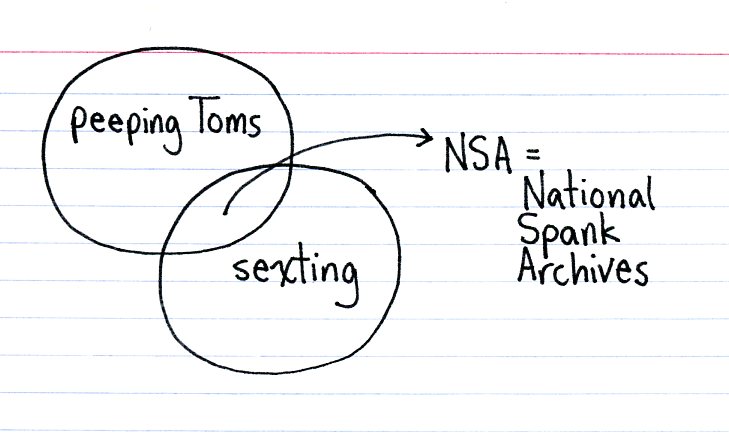
One of the very first things you hear when you attend a Competitive Intelligence (CI) seminar is that CI is the ethical gathering of intelligence. The reason that ethics is stressed so highly when discussion CI, is that if your CI team is dabbling in unethical behavior (and that gets exposed), it reflects upon your whole organization and casts a shadow upon everything you do.

It seems that there are some reporters at Bloomberg L.P. may need to sit back in on some of those classes on ethics. The report in the New York Times states that reporters used information found through Bloomberg Terminal usage from banks and traders to break stories on certain people being fired from those companies (based upon users that suddenly “went dark” … i.e., were no longer logging into their Terminals.) That type of information, while effective, falls squarely on the unethical side of the ledger, and as a result gives all of Bloomberg a black eye.

Immediately, we all started wondering what exposure law firms had to this type of research, and if there were additional issues that were at play. According to Jean O’Grady’s blog, Dewey B. Strategic, the Bloomberg Law platform was not included in this type of internal research strategy. O’Grady contacted Greg McCaffery, CEO of Bloomberg Law, and got confirmation on that point. However, as Jean also points out, many law firms have the Terminals as well as Bloomberg Law access. It brings up ligitimate questions like the one Ed Walters of Fastcase asked on Twitter yesterday:

Alledgedly, Bloomberg reporters where systematically using this type of research on a regular basis. Hundreds of reporters used the technique according to the NY Times article. It simply makes Bloomberg look bad.

In this age of instant communications, hacking, and whistle-blowers, unethical behavior is very difficult to keep covered up. This should be held up as an example to others in the world of information gathering, that if you are performing unethical practices, you should expect that eventually those practices will be exposed. When they are, you will need to spend years repairing the damage.

This same type of damage can happen with Competitive Intelligence research. Be very careful how you conduct your gathering processes, and ask yourself what would happen if those practices were exposed to the public.

I usually put some of the non-legal (but fun) things on Friday posts, but today I am leaning toward more of the “Geeks” side of the blog than the “Law” side. Last week I saw a tweet fly by that mentioned GeoGuessr, so I had a few free moments to go try it out. I’ve probably spend a good couple of hours playing it over the weekend with the family, and found it to be a really fun (and somewhat educational) game to play.

The concept is pretty simple, yet very challenging at the same time. The game puts you on a Google Street View somewhere in the world. You get to move around on the street view, and attempt to figure out where you are based on the landmarks and other visual clues you see. Once you think you know where you are, you zoom in on the inset map and plunk down a marker. The closer you are, the more points you score. The game lasts five places, and you combine the scores for all five guesses.

I usually have three windows open at the same time to help me along:

  1. GeoGuessr
  2. Google
  3. Google Maps

There are times when it is really easy to figure out your location. Last night, GeoGuessr placed me between a What-A-Burger and the South Padre Island Water Tower. Other times it is very difficult to find out where you are. The Outback in Australia is pretty non-descript, and there aren’t a lot of road signs to help you out either!

The game uses a lot of deductive reasoning. For example, are the cars driving on the left or right side of the road? Are the signs in English or Japanese? Is it an arid climate, or are the Royal Palm Trees lining the boulevard? You use anything you can find to help you isolate where you are. For example, there are times when all the signs are in Tamil, but the phone numbers are still Arabic, so I have Googled the prefix to isolate what area code it falls in. I’ve seen delivery trucks with company logos on them and found where those companies are located in order to narrow down where I am. It is like a mix of being Doctor Who stepping out of the Tardis in the wrong location, and Sherlock Holmes using visual clues to determine where I might actually be.

If you’ve got a few free minutes, go try out GeoGuessr for yourself. However, remember it is Monday, so you probably need to quit after one game if you plan on getting any work completed.

Image [cc] Salem State Library

Maybe I’m reading a bit much into this announcement from the Dorraine Zief Law Library at the University of San Francisco, but, the fact that Westlaw has decided to allow graduating law students access to their law school Westlaw IDs through the end of November seems to be a sign that even the folks up in Eagan, MN know it’s a tough market for law grads.

Graduates that go to extend their passwords by May 30th can have access to Westlaw classic and WestlawNext through their student logon. According to the USF post:

Graduates who extend their password will receive access to WestlawNext and Westlaw Classic through November 2013 instead of just through July.  The exact number of monthly access hours is not available, but is at least 40 hours per month.

Graduating students who have already extended their access don’t have to do anything further to get the extension through November.  There’s a link to the extension site in an  e-mail sent to graduating students.  Students may also click the “Need Westlaw this Summer?” ad on lawschool.westlaw.com.

I’m glad that Thomson Reuters decided to allow grads to keep access to this very expensive resource to help keep their research skills fresh as they are hunting for work. Of course, I’m wonder who will be the first grad to put on his or her resume that “if you hire me, I’ll have 40 hours of free Westlaw searching I can bring with me”?? Please, don’t be that person!!
 
Is it live, or is it Memorex iPad?

As I was walking through one of the libraries at the firm, I started looking around at all of the books that still remain on the shelves. Some are battered, but most are in pristine condition with spines that would make an audible snapping sound if you were to open them for the first time. Some are primary law, while others are secondary resources dedicated to specific practice groups. Most of them we have through our multiple online subscriptions and databases. Some will soon be packaged as eBooks. Nearly all of them are expensive (costing $100+ per volume or more.) Yet, the rate of which these physical books are going away is not nearly as fast as I predicted ten years ago when I wrote a couple of chapters in a book about the Futures of Law Libraries. It seems some of us are going to be stuck with these for many years to come.

Then a thought hit me… a crazy thought, yes, but a thought. For about the cost of three of these books, I could actually buy a lower-end iPad and place on the shelf. Could I replicate a reporter set and make it easy for the researcher to ‘flip’ through the online version of the material on the iPad? Could it be set up to replicate the ‘feel’ of a book (which is kind of what the new eBook sales pitch wants us to believe)? What if I told the attorney that, just like with the books, if you use this format, we won’t bill the client for any of the usage? Would that do the trick? Could we get attorneys to use some of the online content that they don’t even know exists (cough, cough, IntelliConnect, cough, cough.) Could everywhere we had a law review section, place an iPad connected to HeinOnline there instead? Instead of a library copy of all those personal desk copies, could we have a pre-loaded iPad available in the library instead?

Is there a way to ween lawyers away from all these books that fill up shelf after shelf? Is that even something we really want to do? I’d really like to test out the whole ‘replace books with library iPads’ idea. Just for the simple reason that even if it failed… I’d at least end up with a number of iPads to play with in the end.


You could be forgiven for believing that I am anti-IT. I have written about the End of IT. I have called IT people names. I have generally been pessimistic about our ability or desire to change.  I stand firmly behind all of the things I have written, but I am absolutely not anti-IT. (Some of my best friends are in IT.) I am, however, terribly afraid that IT as it is currently practiced is becoming increasingly irrelevant to the business. Whatever business your company happens to be in.

To that end, I’ve been working on an IT evaluation exercise. The idea is to evaluate each of the services that an IT department provides and begin to have conversations around the specific value that those services bring to a firm or company. This is built on the premise that IT provides the most value when it is actively supporting the business rather than “keeping the lights on”.  That is not to say that there is not value in keeping the lights on, just that in many cases there may be other less expensive, more reliable, and more secure ways to do that.

This exercise is intended to give context to the ongoing conversation about what IT should be doing and where IT should be investing its time and money. This is not guaranteed to provide any clear or easy answers to those questions. The example below is focused on Legal IT, but you could replace the word “Legal” with your industry of choice, and “Firm” with your company name and I think it would work for any IT department.

I would like to open-source this concept. By which I mean, I want someone else to try it out and let me know how it goes. Suggestions or recommendations are very much encouraged and welcome. 

Ryan

********************************************************************
All IT services fall into one of three categories: 

  1. Universal IT: Technology, infrastructure, or functionality that every Information Technology Department in every company in the world provides.
  2. Legal Specific IT: Technology services that are specific to Law Firms.
  3. Firm Specific IT: Technology services that provide a unique value to our firm and our attorneys.

Enter each category as a heading in a table and list each IT service as an entry beneath the appropriate heading (like below). 

Universal IT
Legal Specific IT
Firm Specific IT
1.
2.
3.
1.
2.
3.
1.
2.
3.

  1. Evaluate each service and articulate the specific value that the service provides to the firm.  If you cannot define the value provided, cross out the service.
  2. You want to try to move as many services as possible to the columns on the right. If you believe you can enhance the service in any way that would provide greater legal or firm specific value, then move it to the appropriate column, make note of the potential value add, and underline the service.
  3. Add any NEW services that would potentially provide legal or firm specific value and place an asterisk on either side.
  4. Circle any services that an outside vendor could potentially provide at an appropriate service level AND the entire Universal IT column.
  5. Draw a box around any service in the Legal Specific or Firm Specific columns that is not crossed out, underlined, asterisked, or circled.

Any services that are:

  • Crossed-out:  Just because IT cannot articulate the value to the firm does not mean the service provides no value.  Ask other departments, or attorneys, to articulate a particular service’s value to them. If no clear value can be determined, begin the End of Life process immediately.  There should not be many, if any, of these.
  • Circled: Begin looking for vendors to take these off your hands. A circled service should not be automatically “outsourced”, but it is probably a good candidate for the kind of service that can, and eventually will likely, be outsourced. Yes, I said to circle the entire Universal IT column. Not everything in this column will be a candidate for outsourcing, but if it’s in this column, it should be considered.
  • Underlined or Asterisked: These are opportunities to increase the value that IT provides to the firm. Invest in R&D for these enhanced or additional services.
  • Boxed: These are the current services which provide the most unique value to the firm. Focus on these and continue to invest resources here.
Repeat this exercise every six months.
Image [cc] CN Impressions

I read a great interview of an EVP from a major financial institution recently. It had two value points for me. The first was the international economic data he explained. He basically said everything is in place for a major expansion, except nobody seems to be paying attention. Whether that bodes well or ill for law firms is yet to be seen.


The second value point was more pressing for law firms. The final interview question was: What keeps you up a night? The EVP had a succinct and focused answer: Talent. He went on to explain that his senior management team needs to be “best in class.” For him this meant a combination of subject matter expertise, willingness to work hard and the ability to bring in business. Or in other words: Get the business and keep the client happy. He knows these goals will drive his business, both in terms of revenue and profitability.

So where are law firms on such a scorecard?

Traditionally law firms viewed talent as purely subject matter experts. Lawyers would gain a seat at a firm based on law school performance and then rise through the ranks to partner based on their lawyering abilities. So being “best in class” meant you were a high-level subject matter expert willing to work hard.

But that is no longer enough. For starters, keeping clients satisfied is only indirectly measured at firms. When a client goes from being a large one, to a less large one, management does take some notice. But even then, reductions in fees can easily be explained by episodic litigation or any number of other factors seemingly out of the partner’s control.

The ability to bring in business has become a more prominent factor for evaluating law firm partners, but this is still in a transition in terms of being a “best in class” measure. For instance, laterals are evaluated on billings, however the profitability of that revenue is not typically measured.

My 2 cents: Today’s Managing Partners should be “kept up at night” on the talent issue as well. But they should revise and expand their definition of talent at the partner level. In order to do this effectively, they will need to start measuring partners with different metrics.

One of the last things the EVP mentioned was that he knew where he had “best in class talent” and where he didn’t. So he spent his energy on making sure the “best” was happy and was pursuing talent to replace those that don’t make the grade. Another good lesson for law firms.

2013 Conference LogoThe Canadian Association of Law Libraries is holding their
annual National Conference May 5th to 8th in beautiful
Montreal. The conference theme is: Librarian:
a multi-faceted professional
, which was inspired not only by the current
demands of our profession, but also by the city of Montreal.

I will be attending the Conference as the representative of
the Special Libraries Association Legal Division, and I couldn’t be more
excited. This is a fabulous opportunity to network with colleagues and friends,
learn from all the fabulous educational sessions and explore a beautiful city.
I wanted to take a quick moment to highlight a few sessions I’m planning to
attend and provide the Twitter information (#callacbd2013) in case you want to
follow the discussion and/or comment.

Date & Time (Eastern)
Session Name
Monday May 6, 2013 @ 9:00 a.m.
Plenary Session: Thriving on Chaos (Winds of Change:
The Future of Law Librarians)
Tuesday, May 7, 2013 @ 9:00 a.m.
Librarians Under Pressure: Stress Management Secrets Shared
Tuesday, May 7, 2013 @ 3:30 p.m.
Librarians as Innovators
Wednesday, May 8, 2013 @ 9:00 a.m.
Plenary Session: Land of Confusion: EBooks’ License Negotiation
Demystified


Colleen Cable is a Library Consultant for Profit Recovery Partners bringing the “consultant angle” to Three Geeks.
Image [cc] PhOtOnQuAnTiQuE

As I sat through a demonstration of the LexisNexis Digital Library (eBook) platform, there were a few thoughts that crossed my mind:

  • The eBook platform for law firms is inevitable
  • How do I keep from suddenly having (paying for) the same “book” in three formats – print, database, and eBook?
  • Holy crap… I’m going to need a really good Technical Services Librarian to manage this!
Whenever a question came up about actually managing a digital collection, the common response was, “the library can simply go to the [eBook platform/library catalog] and run report X” or “process and distribute eBook Z” or “recall the eBook” or “place the eBook on hold” or “place the link to the eBook in your 852 or 856 fields”, and so on. Again, most of the conversation assumed that your Acquisitions librarian, Serials librarian, or Cataloger would simply do their job, but the resulting item was simply an eBook instead of a traditional Monograph, Personal Copy book or a Treatise. In an era of shrinking physical books, the role of the technical services librarian didn’t seem to be a vital. However, in the era of managing eBook collections, that role may be rising from the ashes of the collection.
Bess Reynolds’ article, The Challenges of E-Books in Law Firm Libraries, hits the issue right on the head when she wrote:

The mechanics of acquiring and distributing books, making sure they are up to date, and retrieving books from departing attorneys are all part of the job of the technical services department. Transferring these tasks to e-books was therefore already within our department’s job description.

She goes on to talk about the interaction between the Integrated Library System (ILS) and the eBook distributor and the need to manage the collection for the firm. The key to success is the seamless transition between physical book and electronic book for the actual user (read: attorney.) That seamless transition seems to hing upon the firm’s ability to manage, distribute and maintain the collection and the vendors ability to create a method flexible enough to allow the firm to handle the eBooks in the way that works best for that firm. The connecting piece in this puzzle is a good technical services librarian. So, if you don’t have one already, you better start looking now.

The bad boys of legal research, Ed Walters and Phil Rosenthal of Fastcase, are once again looking at unique ways to look at legal information and create new methods to cull that information. In the latest iteration, they have come up with a way to use an algorithm to identify court cases with negative treatment. They are calling this enhancement, “Bad Law Bot”, not to be confused with J.J. Abram’s movie production studio called Bad Robot.

The idea of algorithmically setting up a way to identify ‘bad law’ has been floating around since the idea of placing legal decisions in database began. When I was at the Oklahoma Supreme Court’s OSCN.NET, we dreamed of doing exactly this same type of identification of bad law, but simply did not have the technology, expertise, or guts to take on that challenge. Looks like Walters and Rosenthal are stepping up to the plate to take a swing at it.

Ed does list a couple of caveats, that should be expected when you use technology to replace humans on decision making processes like this:

  1. It’s an algorithm… thus the “bot” name
  2. If you see that Bad Law Bot has presented negative treatment, then that means there’s a good chance the case has probably been overturned, however if Bad Law Bot doesn’t show negative treatment, that doesn’t necessarily mean the case is ‘good’ law. You should double-check with Shepards or KeyCite.
Despite these caveats, the fact that Fastcase is willing to go out and present something like this to its users shows that they are ready to test the boundaries of what you can do with legal information, technology, Big Data concepts, and the guts to go out and actually do it.
Bad Law Bot is available starting on April 25th, and the press release from Fastcase is included below. Also, Ed Walter’s introduces the product in this two-minute YouTube video.
Fastcase Enhances its Authority Check Citator Service

“Bad Law Bot” Uses Big Data to Identify Negative History for Judicial Opinions

Washington, DC (April 25, 2013) – Legal publisher Fastcase today released an algorithmic enhancement to identify overturned or reversed cases in its Authority Check system – Bad Law Bot. Bad Law Bot uses algorithms to identify court cases that are cited with negative treatment and to alert researchers of a case’s negative citation history.

The Bluebook manual for legal citation requires that, when courts cite a case that has been overturned or reversed, they say so right in the citation. Judicial opinions, and particularly their citations, are full of this kind of “big data” about which cases are still good law. Bad Law Bot scours all of the citations in judicial opinions. When the opinions cite a case as being overturned, Bad Law Bot flags the case for Fastcase users, identifying negative history as reported by the courts.

“Fastcase’s Authority Check feature is already a very powerful tool for identifying whether your case is still good law,” said Fastcase CEO Ed Walters. “Authority Check includes data visualization tools to see the later history of cases, citation analytics and filterable lists of later-citing cases. The addition of Bad Law Bot, to help identify negative history, is a major step forward. This is the first of many additions to Authority Check that we’ll roll out over the next year.”

The new Bad Law Bot feature helps users identify negative treatment of the cases judicial opinions. However, because it only reports what cases say in citations, researchers should rely on Bad Law Bot as an aid to identifying negative history, not as a comprehensive guide.

Since 1999, Fastcase has been building smarter research tools for understanding the law. In 2012, the company launched eBook Advance Sheets available for the major eReaders (iPad, Kindle, Android, and Nook). 

In 2010, Fastcase was the first company to launch an app for legal research, and later, the first company to launch an app for iPad. The American Association of Law Libraries named Fastcase for iPhone the 2010 New Product of the Year. In 2011, Rocket Matter named Fastcase’s apps for iPhone and iPad the Legal Productivity App of the Year and the company furthered its mobile market presence by debuting the Fastcase for Android app in 2012. Lawyers on the go appreciate Fastcase Mobile Sync, which allows full integration of its mobile apps with the desktop version of Fastcase.

Fastcase has gained very strong momentum in the legal research market and continues to challenge the norm in legal publishing and legal technology. Fastcase was voted #1 in Law Technology News’s inaugural Customer Satisfaction Survey, finishing first in 7 out of 10 categories over traditional research providers Westlaw and LexisNexis. Fastcase has introduced new opinion summaries, Fastcase Cloud Printing, and has been named to the prestigious EContent 100 list of leading digital publishing and media companies alongside Google, Amazon, Apple and Facebook for two years in a row.

For more information on the Bad Law Bot feature, visit the Fastcase Legal Research Blog at www.fastcase.com/blog and watch this video: http://youtu.be/ZsKu7FoO2Ns.

About Fastcase

As the smarter alternative for legal research, Fastcase democratizes the law, making it more accessible to more people. Using patented software that combines the best of legal research with the best of Web search, Fastcase helps busy users sift through the clutter, ranking the best cases first and enabling the re-sorting of results to find answers fast. Founded in 1999, Fastcase has more than 500,000 subscribers from around the world. Fastcase is an American company based in Washington, D.C. For more information, follow Fastcase on Twitter at @Fastcase, or visit www.fastcase.com.

###

The Legal Duck is a brand new, very exclusive, and extremely expensive restaurant owned and operated by Lena Dewey and Daniel Cheatom, two of the most successful attorneys in our fair city.  Last week, we sat down with Lena and Dan to discuss their new endeavor…

3 Geeks:   So, what inspired you two to try your hand at being restaurateurs?

Lena:  Dan and I were partners at DCH for nearly 25 years…

Dan:  We both made partner the same year.

L:  Back when we were associates, we realized that we were both passionate about good food. We dreamed about one day opening a restaurant together.

D:  A couple of years ago, Lena strolled into my office and said, “You know, Dan, I think it’s time. We’ve got the money. We’ve got the knowledge.  We’ve still got the passion for good food. Let’s do it.”

L:  So we went for it.

3G:  And you decided to go with a legal themed restaurant?

L: You know what they say, go with what you know, right?

3G:  A number of critics have faulted you for your unusual style. For instance, the average lunchtime meal at The Legal Duck lasts about 4 hours.

L:  When we set out on this journey we decided we would take everything we had learned from our combined 70 years the legal business and apply it to running this restaurant.

D:  We would provide only the finest foods, prepared by the finest craftsmen in the business.  Our Partners and Associates are artists, creating unique and wonderful experiences for our customers.

L:  Perfection takes time.

3G:  Which brings us to another complaint that I’ve heard about the food not living up to the promise.

L:  Really? Where have you heard that?

3G:  Michelin gave The Legal Duck their first ever 2 Negative Stars.

D:  Well, I don’t think their reviewer really understood the value that we are bringing to our diners.  We are exclusively focused on providing the greatest meals to the people with the biggest appetites.  We aren’t really interested in creating commodity food.

3G: Which raises an interesting point. Michelin seemed to believe that’s exactly what they were getting.

L:  In consultation with our service associate, the Michelin reviewer decided to have a simple sandwich, the “Big Mike”.  

3G: Yes, he described it as, “two grass-fed Kobe beef patties, a mild tomato and mayo spread, a sprig of romaine lettuce, gruyere cheese, thinly sliced gherkin pickles, Vidalia onions, all on a sesame encrusted brioche bun.”  Doesn’t that remind you of anything?

D:  It sounds like an amazing sandwich.

L:  Yeah, my mouth is watering.

3G: Changing the subject… You mentioned the initial consultation with your Service Associate.  Can you talk a little about the unusual experience of dining at The Legal Duck?

L:  Sure! You are greeted at the front door by our lovely receptionist and asked to take a seat in the waiting area. 

D:  We believe anticipation is a big part of an enjoyable dining experience, so we ask people to wait even if there are no other diners.

L:  Once you are seated, you are visited by our Service Associate, who asks you a few questions about the kind of meal you are interested in having. 

D:  The kinds of meals you’ve eaten before? Who you’ve eaten them with? Etc. 

L:  Exactly. Then she or he will take that information and do some research on the kinds of meals that other people in your situation have eaten in the past. The associate, will consult with a more experienced Senior Service Partner or two and together they will draw up a customized menu for your perfect meal.  

D:  Then the entire service team will seek advice from an expert chef on the best method for preparing your meal, presentation suggestions, etc. 

3G: You mentioned your chefs, but I understand that you don’t actually have a kitchen in your restaurant.

D:  That is correct.  We’ve determined that the actual preparation of the food can be accomplished more efficiently and economically off site.  

L:  We have subcontracted food preparation to an industrial food services company that primarily caters to major airlines.  We’ve found that they can prepare the food at a tenth of the cost that we could do it ourselves. We pay them ten times what the airlines pay and they give our meals priority.  It really is a win-win.

3G: But isn’t the preparation of food the actual service that you, as a restaurant, should be providing your customers?

L:  (laughing) No. We work in conjunction with our customers to design and implement the perfect meal for their enjoyment.  

3G: Which someone else makes?

L:  Yes.

3G: Uh…OK.  One final question: The average bill per diner for lunch at The Legal Duck is over thirty-five hundred dollars.  First, how is that possible? And as a follow up, how do you justify those prices?

D: Yes, I admit our restaurant is expensive.  But we provide unparalleled customer service and we stand by our work.  We have only had to sue a handful of our diners for non-payment.

L:  And thirty-five hundred is not so much when you realize how much work is being put into each meal. To produce the typical four-hour meal requires at least six hours of a Service Associates time at, let’s say, a hundred and fifty dollars an hour. Then each Partner is charging around three hundred an hour, Expert Chef’s don’t come cheap, maybe five hundred… 

D:  Yep, depending on the time of day. Then there’s the minor incidental expenses for the ingredients, the preparation, and of course, the delivery of the food.  Before you know it, it’s real money.

L:  But it’s worth it.

D:  Yeah, we couldn’t be happier.