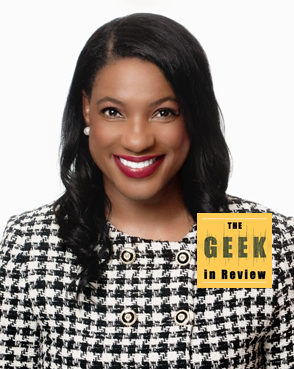
Imagine working in a toxic workplace where you’ve recently laid off a third of your employees and the company is on the verge of bankruptcy. Then a few weeks later, that toxic leader pulls the rest of the leadership team into a conference room for a “all hands on deck” meeting, where he starts the meeting by stating that he loves this team and he cares about all of them. Sounds strange? Well, according to Jeff Ma and Frank Danna, co-authors of Love as a Business Strategy, they thought someone had swapped bodies with their CEO. But, it turns out that this CEO, and fellow co-author of the eventual book, found the motivation to change his behavior and transform himself, and the team, so that they led with love in how they worked with each other, and with their clients. It ultimately saved their business, and their relationships with each other.
Jeff Ma stresses that they are still on the journey into this transformation and that it doesn’t get easier, it actually gets harder. There has to be tough conversations where co-workers commit to the accountability that they have for one another. Honesty is stressed over harmony. And as Ma puts it, “it sucks sometimes to be honest.” Otherwise you end up with what Frank Danna calls “unforgiveness.” That situation where, because the issue is never addressed, it festers and causes a rift, and that unforgiveness grows and grows. So stressing honesty over harmony prevents this air of unforgiveness and leads to a better work environment.
We discuss the six-pillars defined in the book:
  • Inclusion
  • Empathy
  • Vulnerability
  • Trust
  • Empowerment
  • Forgiveness
Even in the law firm environment, Love as a Business Strategy has a place and can improve the overall performance and culture in the workplace.

Listen on mobile platforms:  Apple Podcasts LogoApple Podcasts |  Spotify LogoSpotify
Links Mention:
Contact Us
Twitter: @gebauerm or @glambert
Voicemail: 713-487-7270
Email: geekinreviewpodcast@gmail.com
Transcript

Continue Reading Leading with Love as a Business Strategy with Jeff Ma and Frank Danna (TGIR Ep. 166)

A few weeks back, we talked with Norton Rose Fulbright’s Zack Barnes on how law firms can invest in their communities through local innovation hubs like Houston, Texas’ Ion District. We wanted to dive deeper into that law firm/local innovation idea, so Zack is back with us and introduced us to Joey Sanchez, Senior Director of Ecosystems at The Ion Houston. With his weekly “Cup of Joey” innovation gatherings, Sanchez says his responsibility is to “engineer serendipity” in the innovation community.

The Ion Houston is a lesson in “fail fast.” The original idea revolved around the bid to lure Amazon’s second headquarters. And despite being the fourth largest city in the United States, Houston didn’t even make the top 20 of Amazon’s list. What that told the innovators in Houston, along with the biggest backer of the project, Rice University, was that Houston needed to reevaluate itself and make a concerted effort to organize its innovative community.

The Ion is not just a beautiful reimagination of a 1930’s era Sears building. It is a 12 block district in the center of Houston that is looking to reimagine a city that has long been viewed as having a cowboy culture rooted in the fossil fuel industries. While the rest of the world may think of Austin as the hot area for innovation, Sanchez reminds us that Houston has the biggest potential for growth with its variety of industries like the Medical Center, NASA, the Port of Houston, the influx of alternative energy companies, and its large, diverse population.

The legal industry is also taking note of what is happening in the Ion District with firms like Baker Botts, Norton Rose, Hunton Andrews Kurth, and other law firms making a presence for themselves among the startups. Entrepreneurs are looking for protections for their intellectual property, reducing risks associated with being a new company, and for guidance through the legal and regulatory landscape. Having innovation districts in large cities like Houston are a prime spot for law firms to position themselves to help innovators within their local communities.

Links Mentioned:

The Ion Houston
The Ion District
Cup of Joey
Blue Tile Project
Texas Startup Manifesto

Listen on mobile platforms:  Apple Podcasts LogoApple Podcasts |  Spotify LogoSpotify


Contact Us

Twitter: @gebauerm or @glambert
Voicemail: 713-487-7270
Email: geekinreviewpodcast@gmail.com
Music: Jerry David DeCicca

Transcript

Continue Reading Engineering Serendipity with The Houston Ion’s Joey Sanchez (TGIR Ep. 165)

It has been almost three years since the American Association of Law Libraries (AALL) held its last in-person conference in Washington, DC. Since that time, both the New Orleans (2020) and Cleveland (2021) Conferences were replace with an online event. Needless to say, many members are ready, albeit still with some concerns, to meet their colleagues in person once again. From July 16th through the 19th, nearly 900 members will gather in Denver, Colorado to enjoy the educational and social gathering of law librarians. Another 60+ vendor organizations will also be at the Denver Convention Center under the gaze of the iconic Blue Bear.
We asked current AALL President, Diane Rodriguez, along with AALL Vice-President, Beth Adelman, to take time out of their busy preparation schedules to come in and talk with us about what members and vendors should expect from the conference. Those of us who attend AALL conferences understand that it is truly a technology conference where vendors go to show their enhancements to existing products or to launch new products to the tech savvy end-users of many of their products. Even Bob Ambrogi has put this as one of the top legal tech conferences in the legal industry
Rodriguez and Adelman have spent the last year preparing AALL for a post-pandemic presence in the legal industry and focused not only on returning to in-person events, but also creating a new Strategic Plan for the Association headed by Beth Adelman. In addition, the organization continued its fight for access to justice and legal information. Diane Rodriguez penned an article for the ABA Human Rights Magazine earlier this year titled “Putting the Spotlight on Civics Education: How Law Librarians Are Helping to Bridge the Access to Justice Gap.”
Of course conferences aren’t all educational programming and vendor interactions. We all are working in some baseball, concerts, books stores, and art exhibits while we are there as well. For more information visit the AALL Conference Website.

Listen on mobile platforms:  Apple Podcasts LogoApple Podcasts |  Spotify LogoSpotify
Contact Us
Twitter: @gebauerm or @glambert
Voicemail: 713-487-7270
Email: geekinreviewpodcast@gmail.com
Transcript


Continue Reading Diane Rodriguez and Beth Adelman on AALL’s Preparation for an In-Person Denver Conference (TGIR #164)

[Ed. Note: This week marks The Geek in Review’s 4th Anniversary. We thank you all for listening, subscribing, and telling your colleagues about what you hear. We’d love to hear more from you on what your favorite episodes are or what topics you’d like us to cover. Tweet us at @gebauerm and @glambert with your thoughts. Thank You Listeners!! – GL/MG]

We all know the saying “High Risk, High Reward.” But when it comes to data security, Peter Baumann, CEO and co founder of ActiveNav, we derive the value of the data because we just can’t get through the risk. There are three things always facing businesses whenever there is data involved, and that is the protection of the business’s reputation, the costs involved in non-compliance, and then the exponential growth of data within the organization. We are so focused on reacting to these three variables, that we simply cannot do anything on the value of the data itself.

Peter talks with us about the number of existing patchwork of regulations around the world, and how it makes it too difficult for business and organizations to comply. And while most experts suggested that regulations like GDPR would only govern those with businesses or people in Europe, it’s become the de facto compliance bar for privacy and data security for many businesses. He suggests that the US Government needs to step in an set a clear regulatory path around data privacy and security so that businesses know what the rules are, and the legal industry can better advise their clients on what steps they need to take to be compliant.

We dive deep in this episode and talk about what is structured and data. And how the existence of “dark data” within a business is what brings the highest risk of all. While doing data assessments on Terabytes and even Petabytes of data is extremely expensive, data breaches are even more expensive. The goal in Peter’s mind is to get to “zero dark data” so that you can stop worrying completely on the risks, and start understanding the value within your data.

Listen on mobile platforms:  Apple Podcasts LogoApple Podcasts |  Spotify LogoSpotify
Contact Us

Twitter: @gebauerm or @glambert
Voicemail: 713-487-7270
Email: geekinreviewpodcast@gmail.com
Music: Jerry David DeCicca

Transcript

Continue Reading ActiveNav’s Peter Baumann: There is So Much Value In Your Data… Once You Control the Risks (TGIR #163)

Today is the second official celebration of the Federal Holiday, Juneteenth. Some of us are working on this day. Some of us have the day off. Some of us are using this time as a day of service. It’s a mixed-bag of results on how we, as a nation, view the importance of Juneteenth, and how it fits within the whole of the American story. As I was walking last night around my neighborhood and listening to podcasts, Jonathan Greenblatt and Bryan Parker’s “The Law in Black and White” podcast began playing and it really struck me as relevant to why the celebration of Juneteenth is so disjointed, even here in Texas where it began.

Jon and Bryan’s guest was Dr. Renee Harrison, Professor of African American and US Religious History at Howard. Apparently Bryan, ever the believer in life-long learning, is working on his Masters of Divinity there at Howard, and has had the pleasure of taking a few of Dr. Harrison’s courses. And, after listening to the discussion, it made me want to audit a class or two from Dr. Harrison as well.

Dr. Harrison’s new book, Black Hands, White House: Slave Labor and the Making of America, talks about the role “Enslaved black people played a role in building America’s infrastructure and wealth.” And she asks the poignant question, “why is it there is no monument on the National Mall in the National City that speaks to that truth?” American value a single-story narrative about our history, yet this large part of our history is not part of the cultural memory of America. Dr. Harrison points out:

Yes, the cultural memory is all of ours. The American story is all of ours. And I often raised the question, how does a nation or individuals heal without the whole story? How does one or how does a nation address injustice is in America, from slavery to present, without the voices of the injured? And that’s what the museum points us to, the voices of the injured. They’re not in celebration mode. They’re in reflection mode, when you see those shoes, you’re in reflection mode. So how does one address injuries in America from slavery to present without the voices of the injured? How is healing possible with a single story narrative? That means a one sided narrative about America’s history by which we see enshrined in monuments? And whether I said that monument or that narrative is verbal meaning something that’s told in speech, or inscribed something that’s written in a book, or enshrined in a monument? How is healing possible when we have just one dimension of a story?

This is a law blog, and The Law in Black and White is a law podcast, so Dr. Harrison turns the questions back on the interviewees about how does a nation of laws, who values the rule of law, stand by those values when Proclamations are ignored. When the 13th Amendment is ignored, and in some cases not even ratified until as recently as nine years ago? She asks, ” I, as a historian, not a lawyer, I sometimes wonder, what is the value of proclamations, orders and laws that are blatantly disregarded by one segment of the society, but remain enforceable with the greatest gravities of penalties to another segment comprised of people who look like me?”

It is a great conversation, and I hope that whether you are working, relaxing, or doing a day of service, that you take the time to listen in on this wonderful conversation.

Links:


While we are still struggling with COVID outbreaks this summer, the 2022 Summer Associate ranks are faring quite differently than their 2021 counterparts according to a recent survey conducted by Law360. Kerry Benn, Director of Series Surveys and Data at Law360 breaks down the results of the survey and explains how the struggles differ significantly this year. One of the biggest shifts from 2021 to 2022 was around mentorship and the need for the summer associate to “connect” with the lawyers of the firm in face to face interactions. While many law firms still stressed the need access to mentorship, the summers had much less of a concern for that this year versus last. One stressor that did rise this year was the ability to handle the workload being placed upon the summer associates this year. 
Not surprisingly, the preferred places to work as a summer associate were Kirkland & Ellis (the new #1), Latham, Cooley, Skadden, and Sidley Austin. One thing that was surprising was the salary ranges for those summers who did not land a BigLaw job. Some firms were paying as little as $15.00 and hour. That made some law students reconsider working at a law firm, or going back to Target or Olive Garden and make more. The flexibility of law firms to allow for associates to work remotely continued and seems to be something that may have a long-term affect going forward for a number of years. However, 92% of summers said they would be willing to work in the office, so there may be some flexibility on both sides of this equation.
We also ask Kerry Benn about future surveys that Law360 is producing including the second part of the Summer Associate Survey that reviews their actual experiences, the Glass Ceiling Survey, and Diversity Reports. Benn looks into her crystal ball and projects that there will be more demand for LGBTQ+ and additional diversity surveys and how law firms are implementing alternative structures in their fee arrangements with clients.  

Listen on mobile platforms:  Apple Podcasts LogoApple Podcasts |  Spotify LogoSpotify
Links Discussed:
Contact Us
Twitter: @gebauerm or @glambert
Voicemail: 713-487-7270
Email: geekinreviewpodcast@gmail.com
Transcript

Continue Reading The Geek in Review Ep. 162 – Law360’s Kerry Benn on 2022 Summer Associate Preferences, Challenges, and Options

The legal operations community was barely nascent a decade ago. Now there is a booming LegalOps profession and a number of professional associations have sprouted up to help the community learn and collaborate. Legal Operators is one of those communities. We asked the founder of Legal Operators, Colin McCarthy, to come on the show and talk about why he took a small legal ops community that started with a few people doing TED-Talk style presentations over drinks, to a community of thousands. Legal Operators produces online learning programs, a list of legal operations software and services, job board, and an innovation hub in order to support the growing legal operations profession.

Recently, Legal Operators created a magazine with the planned distribution in the tens of thousands. While this may seem outside of what you would think a technology-forward operations would do, McCarthy says he believes in doing the unexpected, and providing the best platform for the distribution of knowledge and information. Even if that means going “old-school” from time to time. Check out the online version of the Legal Operators Magazine here.

In September, Legal Operators is hosting the Summit By the Sea at Half Moon Bay, California. The September 14-16, 2022 curated, in-person event is designed for 100 legal ops professionals to gather together and share in conversation, networking, and best practices exchanges. There are a few seats still available.

Listen on mobile platforms:  Apple Podcasts LogoApple Podcasts |  Spotify LogoSpotify
Information Inspirations

If you are looking for great podcast content that includes some of our peers in the legal community, check out Steven Poor’s Pioneers and Pathfinders podcast where he’s recently brought on the likes of Ed Walters, Colin Levy, Bob Ambrogi, and more.

Speaking of Bob Ambrogi, check out his article, “Why Legal Tech Fans Should Attend AALL in July” on his LawSites blog. Bob is a long-time supporter of the law library and legal information profession and has said for years that the AALL conference is truly a legal tech conference as well as an information conference. Add to this, it is in Denver this year, and you now have multiple reason to attend.

Contact Us
Twitter: @gebauerm or @glambert
Voicemail: 713-487-7270
Email: geekinreviewpodcast@gmail.com
Music: 
Jerry David DeCicca

Transcript

Continue Reading The Geek in Review Ep. 161 – Colin McCarthy of Legal Operators on Building a LegalOps Community

I had the good fortune to attend the first in-person CLOC Global Institute in three years. It was an extremely positive experience. Unfortunately, I came home to find I was different kind of positive (new reality; unsurprising after three weeks of travel). I was therefore not able to timely complete my final CGI Dispatch for Artificial Lawyer. Blogs, however, have no deadlines.

To recap:

Dispatch #1 discussed the rise of legal ops in the context of ever-increasing scale, organizational complicatedness, and legal complexity.

Dispatch #2 covered the stellar pre-conference Legal Ops 101 session, highlighting the importance of education when most legal ops roles are net new and, therefore, being filled by individuals with no prior experience.

Dispatch #3 reported on the first day of CGI, which was bookended by sessions on storytelling (one of my favorite topics).

Dispatch #4 was to be a reflection piece. While I could have done without the multiple days of fatigue and brain fog, I am glad I had the opportunity to truly reflect.

Let me set the scene.

LARGE CONFERENCE ROOM — BELLAGIO, LAS VEGAS — CLOC GLOBAL INSTITUTE — LEGAL OPS 101

The presenters are lined up on stage at the end of a three-hour session built around the CLOC Core 12. The Q&A session is commencing. I am part of a sold-out audience of 170+.

Question: At a company where legal ops is new, which of the Core 12 would you start with?

Presenter1: Well, I began by getting the DMS under control.

Me (mouthing silently): What? No?

Presenter2: Typically, ebilling and outside counsel rates get attacked first.

Me (shaking head and whispering): But…but…

Presenter3: Knowledge management.

Me (clutching table and muttering compulsively): No! No! You start with the business! The business!

Presenter4: Department budgeting.

Me (spontaneously combusts)

END SCENE

The above is not a literal transcript. But it is a fair recounting of the conclusion of the excellent Legal Ops 101. What was unfair was my reaction.

While I have been wrong many times before (here, here), I stand by my substantive point in this instance. I am a broken record (most recently, here) about the importance, and unfortunate absence, of centering business needs in law department planning.

But being right is different than being fair. Continue Reading CLOC Global Institute – Reflection (Delayed)

We all know that it takes some “outside of the box thinking” to help improve the legal system in the United States, especially when it comes to Pro Se litigants. Courtroom5 CEO and co-founder Sonja Ebron does exactly that with her startup focused on guiding Pro Se litigants through complex court processes. Ed Walters, CEO and co-founder of Fastcase wants the legal industry to stop trying so hard to reinforce that “box.” Together, Ebron and Walters are creating a process to help litigants access and navigate the court system through a combination of case process instructions, legal information, Artificial Intelligence, and collaboration with legal professionals. Eventually, Ebron would like to see the courts themselves leverage Courtroom5’s abilities to help those seeking legal recourse.

Walters stresses that the “North Star” of legal practice should be the wellbeing of clients. In a system where according to The World Justice Project, over 75% of legal needs go unmet, and some 80% of citizens seeking judicial action do so without the use of legal professionals. Part of that solution lies with the courts and the need to focus on the ability “to filter out people who need lawyers helping people who don’t.”

Once again, this is not about replacing lawyers with robots, or encouraging Pro Se litigants to not seek legal assistance. Courtroom5 and Fastcase are seeking ways to improve the overall process of placing the right information in front of litigants, at the right time. Even if those instructions are to highly recommend seeking legal counsel.

Listen on mobile platforms:  Apple Podcasts LogoApple Podcasts |  Spotify LogoSpotify

Links Mention:

Contact Us
Twitter: @gebauerm or @glambert
Voicemail: 713-487-7270
Email: geekinreviewpodcast@gmail.com
Music: 
Jerry David DeCicca

Transcript

Continue Reading The Geek in Review Ep. 160 – Sonja Ebron and Ed Walters Collaborate on Courtroom5 and Fastcase to Help Pro Se Litigants Access Justice

When three legal innovators gather together in their town of Houston, the topic drifts toward the interesting innovation and creativity hubs happening around the city. Both inside and outside of law firms. In a special “after-hours” episode of The Geek in Review, we talk with Norton Rose Fulbright US’ Head of Innovation, Zack Barnes. The conversation is a diverse as the city. We talk about the The Ion innovation epicenter and Zack’s interest in how these types of innovation hubs can use help from the law firms within the city to help guide entrepreneurs in the early stages. 
In addition to the conversation revolving around legal innovation and creativity, we also talk on Zack’s experiences with creating and writing patents as a start-up entrepreneur himself, and finding other start-ups to invest in for companies like Halliburton. One big difference between innovation within corporations and innovation within law firms is the story that the innovators need to tell. At corporations, it’s about establishing a viable product, where at law firms, the story is more around the value and the relationship enhancements to the clients.
Zack also describes how he went to college to be a mountain bike racer and how that love of speed expanded to a faster, but less bone breaking hobby of racing Corvettes. To top things off, we lubricate the discussion with some wonderful local Houston beers. Buckle up and grab your own favorite beverage as we talk all things innovation and happenings here in our favorite city of Houston. Let us know if you are ever in town and we can take you to one or more of the great innovation and brewing spots around town.

Listen on mobile platforms:  Apple Podcasts LogoApple Podcasts |  Spotify LogoSpotify
Links mentioned:
Contact Us
Twitter: @gebauerm or @glambert
Voicemail: 713-487-7270
Email: geekinreviewpodcast@gmail.com
Transcript

Continue Reading The Geek in Review Ep. 159 – After-Hours with NRF’s Zack Barnes