Later this month I will be co-presenting with Jordan Furlong at the ACLEA Mid-Year Meeting in New Orleans. Our topic is using social media as part of your web presence and your overall marketing strategy. This prompted me to write a paper (for the handouts) on Marketing 2.0. I wanted to put a stake in the ground on how marketing is evolving in general and use that as a foundation for us to explore the value of various social media options in the presentation. I am breaking the article up in to three pieces for the blog and adding in some editorial (in italics) about how each article segment impacts or applies to the legal market.
Marketing Origins
Marketing, as we know it now, was born in the mid 20th century. The growth of radio and TV provided the means and impetus to get the attention of customers and persuade them to purchase products and services. In those days the limiting factors were the scarcity of marketing channels. We had 3 commercial TV stations and a limited number of radio stations. There were daily, weekly and monthly papers and magazines as well. But the main point here is that the owners of the distribution channels were in a position to determine who had access to their growing list of listeners, readers and viewers.
The scarcity of marketing channels has been even more pronounced for lawyers due to their late arrival to the marketing world (Bates in 1977) and the lack of knowledge on where their customers look for product information. This scarcity situation lead to lawyer referral service channels via bar associations and ultimately, the ubiquitous local TV ads for personal injury lawyers. Even today lawyers use of traditional marketing channels is quite limited. Their advertising dollars tend to be focus on client trade publications and other narrow channel options.
Now
Over the past 10 or so years, this scarcity situation was changed dramatically. Now what is scarce is customers’ time and attention. The number of potential channels for delivering content to the market is now effectively infinite. So as a marketer, instead of competing for space in the channels, you are competing for position in the various channels along with individual customer’s attention.
The challenge of being late to the game is compounded in the web 2.0 space. As lawyers find the need to actually compete for position on the web, their lack of market knowledge about their customers is a tremendous handicap. Additionally their style and impulse is one-direction marketing. They are used to being the expert who others come to. The primary marketing experience for lawyers is letting customers know they are experts and thus someone they should hire. In an environment where the ability to even spot your customer is a basic skill, the ability to actually get one’s attention in the mass chaos of web content is well beyond lawyers’ current skill-set.
However the web is full of opportunities and resources for lawyers to easily access. So there is hope for playing catch up.
In Part Two of the series, we will look at the interactive nature of web 2.0 marketing options and explore the impact of customers participating in the marketing dialog.

Milano, DiMucci and Mastroangelo

Fred Milano passed away on Sunday at the age of 72, just three weeks after being diagnosed with lung cancer. Milano is best known for his place in Rock and Roll history as being in the doo-wop band, Dion and the Belmonts. However, Milano had a second career later in life as a Legal Coordinator at the Rikers Island jail complex in New York City.

According to Milano’s obituary, he taught a legal research class and assisted inmates with researching their cases. Karen Powell, director of the law libraries said that Milano had lots of energy and you knew when he was in the building “because we’d hear him singing and skipping up the stairs.” Milano was still performing with the Belmonts just weeks ago at casinos and other venues.

Here’s Milano, along with Dion DiMucci and Carlo Mastrangelo on American Bandstand singing A Teenager In Love.

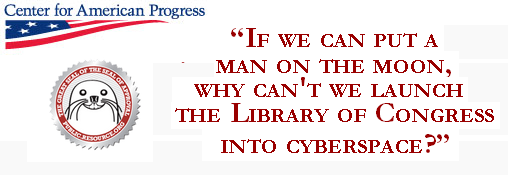
There are a couple of projects out there that I wanted to point to everyone. First of all there is the Citizen Archivist Dashboard created by the Archivist of the United States (AOTUS), David Ferriero. Second, there is the campaign/petition by Carl Malamud to start a nation effort to digitize all public government information. Both are noble projects and are worth a look, and your support.

Citizen Archivist Dashboard

The idea is simple — use the idea of crowdsourcing to improve the National Archives and use the efforts of “the crowd” to:

Carl Malamud of Public Resources.Org and John Podesta of Center for American Progress are petitioning the Federal Government to start a Federal Scanning Commission, and have but a couple of weeks to gather 25,000 signatures. In their letter to President Obama, Malamud and Podesta list six questions that they would like a Federal Scanning Commission to answer:
  1. What are the holdings of our national institutions? How many images, documents, videos, and other objects are there?
  2. How long would it take to digitize these materials?
  3. How much would it cost given current technology? Is there directed research or are there economies of scale that would bring those costs down?
  4. What is the strategy for digital preservation of these materials? How will we avoid digital obsolescence?
  5. What is the strategy for identifying restrictions on use of the material? How does one identify and safeguard materials that have copyright restrictions, contain personally identifiable information, or contain classified materials?
  6. What are the economic and non-economic benefits of such an effort?
    • What are the cost savings to government?
    • What are the economic benefits? Would this effort enable industries that build on top of scientific and technical information, spur innovation in the legal marketplace, or enable our creative industries to create more effectively?
    • What are the non-economic benefits? Will such an effort lead to better STEM and other educational efforts? Will it promote a more informed citizenry and better access to justice?
Go take a look at both of these efforts, and if they address a need you think needs to be address, then give your support to them.

I’m still amazed at some of the Microsoft products that are common on the desktop in 2012. So, here’s a few I want to see go away by year’s end:

You’re not much better than your cousin IE6
Really?? Everytime I reboot I have to see this??

It’s not that I don’t love you… I’d just rather date your younger sister ’10

See my note to your younger sister, ’03, above

More like “Slow Up The Web” (come on! get with HTML5!)

You’re definitely not my “type” either!

We would like to thank Jordan Furlong, Simon Fodden and Steve Matthews for awarding 3 Geeks and a Law Blog with the 2011 Friend of the North ClawBies Award. It is quite an honor (or should I say, honour) especially being mentioned along some wonderful blogs like Mary Abraham’s Above and Beyond KM, Ron Friedmann’s Strategic Legal Technology, and John Wallbillich’s wiredGC blogs.

Toby and I constantly remark on the disproportionate number of Candians we see leading conversations at the conferences we attend on Knowledge Managment, Law Practice Management, Legal Technology, Law Librarianship and just about any other topic that we write about on this blog. I smile each time I hear a speaker say “PRO-cess” rather than “Prah-cess” and see the letter “u” added to PowerPoint slides in words like color and humor. So, we are happy that our Friends to the North consider us their friends as well.

Now we just need to get a few of those friends to guest-blog for us in 2012!!

It is day 366 of Cindy Romaine’s “Future Ready 365” Project. I imagine that last night may have been the last time she went to bed and slept without waking up in the middle of the night to make sure that she scheduled the next blog post properly and that it would go out on time. Either that, or she just collapsed from exhaustion from a massive project that gathered 365 guest blog posts on the topic of Librarians preparing for what the future has to bring to our profession. My hat is off to her for thinking big, taking chances, reaching out to the members of SLA and twisting their arms to contribute, and for achieving her goals. Well done, Cindy. Well done!

As someone that encourages people to guest post here on 3 Geeks, I know a bit of what she’s talking about, but not nearly on the scale that she took on in 2011. Just think of how difficult it is to work with one person at your office on a project. Now, think of expanding that to working with hundreds of people across the globe. Each having to complete their piece of the project… on time! I saw the fire in Cindy’s eyes in 2010 when she talked with me on the project, and I made sure that I got my part in early. I knew I couldn’t escape, and I could tell that she would hound me until I got my post in and published. 
In the final post, Cindy Romaine points out eleven lessons she’s learned from this project. If you ever thought of starting a blog, or contributing to a group blog, then take these lessons to heart: 
  1. What’s Hot. 
  2. Already There. 
  3. Business Savvy Required. 
  4. It’s Quotable. 
  5. SLA is made up of tribes. 
  6. Go Team! 
  7. The power of social media is in the connections. 
  8. Social media is free, but it is not cheap. 
  9. I can rise to the occasion. 
  10. Go big or go home. 
  11. SLA Rocks. 
Although Cindy may not want to put down the twelfth lesson, I can assure you that somewhere on this list needs to be:
   12. It is freakin’ hard work! 
Ask anyone that has attempted to start a project that requires contributions from 365+ people how they would plan to do such a thing. Many would say it is impossible. Future Ready 365, however, shows that it is very hard… but it is worth it in the end. 

Image [cc] fixedgear

As we say goodbye to 2011 and say hello to 2012, I’d like to take a moment to mention some of the things I’d rather not see make it into the new year (at least on my Twitter Feed.) Besides running into this poor sap that thought getting a Fail Whale tattoo is going to be something that will cool in 2012 (plus, that puppy looks infected to me), there are a few more things I’d like to see go into our collective pasts. So, if you are on Twitter, here’s a few things I’m begging you not to do next year:

  • Don’t make us feel bad for you by sending a tweet to Ashton Kucher, and honestly thinking that he will tweet you back
  • Don’t brag about becoming the “Mayor of Smith, Jones, and Williams law firm” (especially when you don’t even work at that law firm!)
  • Please don’t send anything that ends with the oft-used hashtag #fail
  • Don’t brag about your Klout score (if you have to tell people you have “klout” you probably don’t)
  • If you’re a celebrity with 100K followers, don’t call breastfeeding #nasty
  • Please stop the tweets that tweet about the value of tweeting
  • Find the backspace button and don’t tweet with more than 5 @mentions or 5 RT’s
  • For goodness sake, don’t send me a tweet that say “Follow Me… I’ll follow you back!” (come on… you’re better than that!!)
  • I know some of you love those “Inspirational Tweets” but post those on Facebook instead, okay??
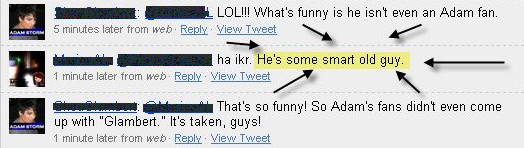
  • Stop sending me tweets that say how sad you are to find out that I, @glambert, am not singer Adam Lambert (although, I am quite fashionable for a law librarian and have been known to break out in song.)
Being the “smart old guy” isn’t too bad, though.

Whew… I feel so much better getting those off my chest. I wanted to say anything that mentioned #election2012, but I have a feeling those are going to be unavoidable in the next 320 days or so.

Got some tweet-types you’d like to see go away in 2012? Put ’em in the comments. It’ll make you feel better.

On a call with Greg Kaple and Gillian Neer from IMS, our conversation lead to a small epiphany for me. We were talking about how firms and clients are dealing with change and the current uncertainty in the market. This lead me to conclude that Uncertainty is part-and-parcel of the New Normal. You might say … Duh, everyone knows that. But bear with me on an explanation.
As an economist, watching the New Normal unfold has been a fascinating experience. One widely held economic belief has been that significant amounts of capital have been sitting on the sidelines waiting for markets and global politics to settle down before reentering the market. This makes perfect sense. People with money want some idea of the risks associated with their investments before they will make them. So it is better to sit on some cash for the short-term rather than invest it in unknown risk / reward options.
But here’s the epiphany: That level of uncertainty may be here to stay. And it may even expand in the future. Two examples to demonstrate this:
– Recent news about Iran threatening to blockade oil shipments gave speculation to the possibility of $5 per gallon gas by summer. Wild fluctuations in the market like this have been occurring with greater frequency and make it very difficult to predict the trend of prices, even in the very short-term. If you are in the energy business, your investment decisions will be highly impact by the difference between $3 and $5 per gallon.
– Anyone expecting the US government to become more consistent and rational after the next election cycle needs to change their medication. The New Normal is about constant change and government is the last institution to give in to change. So expect ongoing uncertainty here as well.
The bottom line is that rapid change results in uncertainty. And rapid change has become the norm.
In our conversation, we wondered with so much uncertainty where should a law firm invest its IT dollars? Our answer: invest in flexible infrastructure. Uncertainty drives the need to be able to adjust quickly to changing environments, driving the need to add and remove functionalities under very short turnarounds.
For the broader market it will be interesting to see how investment decisions adapt to long-term uncertainty. Capital cannot sit on the sidelines forever.
What I learned today: Epiphanies are fun, but they can make your head hurt.

In my ongoing study of the Law Factory vs Bet-the-Farm dialog, I keep an eye out for interesting news. Today served up a doozy. The Wall Street Journal ran the article “Two Lawyers Strike Gold In U.S. Disability System.”
The article discusses how two lawyers went after perhaps the lowest level of legal work possible – so low the US government opted to allow non-lawyers to perform the work. How did it turn out? “Last year their firm collected $88 million in fees ….”
The article goes in to some detail about questionable practices of the firm involved. Harkening back to my Bar days, it always amused me to see attacks on services like this, since they may harm the public – or the public good, in this case. What is almost never discussed, including in this article, is the point that many more people are getting access to justice because of this service. This point is implied in the growth of fees to lawyers in this market segment. Which likely is a result of the firm “spending more than $20 million on TV ads in the past year.”
So here we have a firm using the free market to increase access to justice. Is there a need for some oversight? Absolutely. Too bad lawyers didn’t take on this market which would have included a regulatory component. I suppose it’s easier to criticize the success of others than admit your own failing in creating a solution to a problem.
Moving right along to a bigger punch line hidden in the story, “In 2010, the brothers sold a large stake in their company to a division of H.I.G. Capital, a Miami-based private-equity firm.” Hmmm … seems like a market validation of the model to me.
Where does this leave the dialog?
On one hand we have lawyers expressing all kinds of concerns about taking on commodity work, as it is somehow beneath them. On the other hand you have a firm that happily embraced commodity work and is driving a very positive bottom-line while reaching a previously un-served segment of the legal market. At some point the legal market may want to step down from its crumbling pedestal and embrace the commodity brand. As this example illustrates, when you leave it to others, you are exposing clients to un-regulated services and potential harm.
image [cc] sailorwind

It’s that week between the Christmas break and the New Year’s Break. Unlike Law Schools, Law Firms are open for business. After talking with a number of people from different regions of the United States (and Canada), it seems that certain areas are very busy this week… while others will see an uptick in 99¢ downloads of EA Games to their iPads this week.

So, we thought we’d put together this extremely un-scientific survey to see what lawyers at your firm are up to this week.