Last post, I challenged myself after seconding an observation from Toby about discounts. Toby wrote:

Discounts are the market (via specific clients) telling a firm their prices are too high for a piece of work. One might think firms should lower their prices in response to this information, however, that could be a

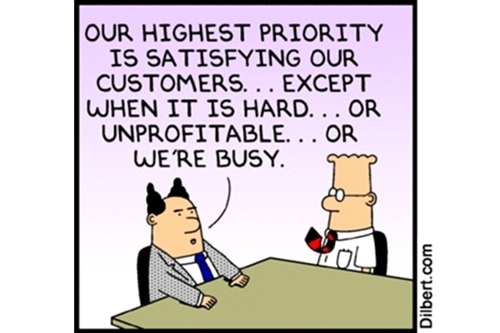
I wrote a post last week in which I called for a moratorium on the term Artificial Intelligence in relation to the law.  Instead I suggested that you should just replace AI with the term Automation because “they’re exactly the same thing, at least as far as the current legal market is concerned.”

Some people

I am calling for an official moratorium on the term Artificial Intelligence in relation to the law!  Everyone please just stop using it. It’s a needlessly charged word that only confuses and clouds the underlying issues whenever it comes up.

From now on any time you feel the need to use the term Artificial Intelligence, replace

I’ve shared elsewhere the story of my first contact with law firms. I was not a lawyer. I was a sandwich jockey. I didn’t make the sandwiches, I sold them. I was an account rep for a historic Los Angeles deli. My biggest account was a law firm. They were my best and worst client.

Image [cc] evan p. cordes

One of the biggest question marks in the legal industry is around driving change in law firms. We all know change is needed, but it tends to come very slowly for law firms [insert shocked exclamation here, soaked in sarcasm]. There are a number of classic law firm change methods

Confirmation bias is a source of comfort. Faced with the choice between changing one’s mind and proving there’s no need to do so, most of us get busy on the proof. If you have an opinion whether the market for legal services is changing, or not, you can find plenty of ammunition from recent studies,