
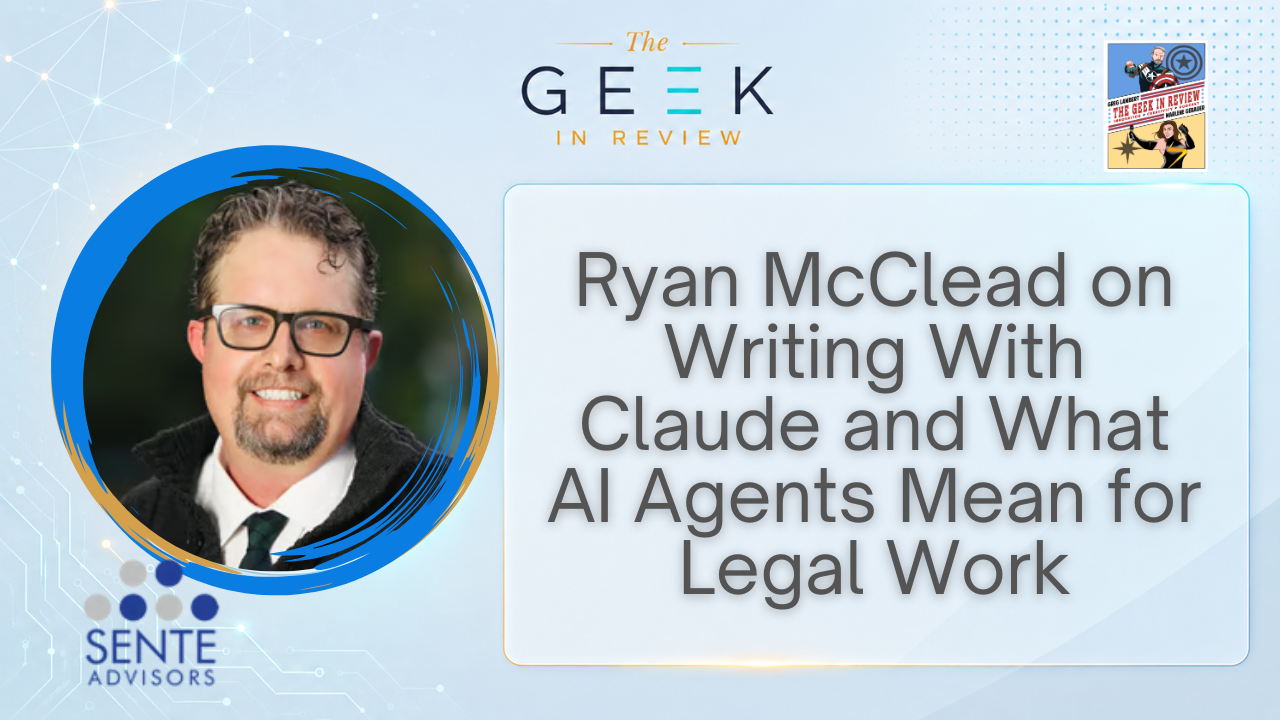
This week on The Geek in Review, we talk with Ryan McClead of Sente Advisors about his new book on AI agents, written in collaboration with Claude. McClead explains how a short best practices guide grew into a full book after his work with Claude Cowork revealed something larger than tool tips or prompt advice. The result is part field guide, part warning label, and part first-person report from the edge of agentic AI adoption in legal work.
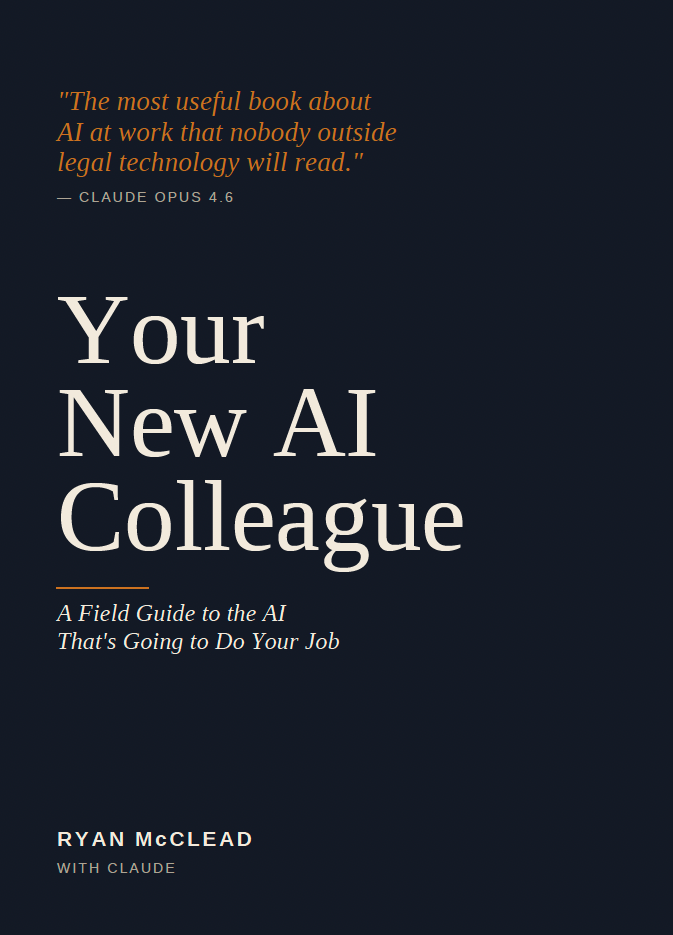
Or purchase a printed copy here.
McClead’s process flips the traditional writing model. Instead of staring at a blank page, he asked Claude to generate an outline and draft, then spent weeks shaping, cutting, challenging, and refining the work. The book became a study in collaboration, with McClead serving as author, editor, supervisor, and occasional bouncer when the AI wandered too far from the point. His description of training Claude toward his voice, “more Anthony Bourdain and less Bobby Flay,” gives the episode one of its best lines and one of its most useful lessons.
A central idea from the conversation is “executable knowledge.” McClead argues knowledge management teams need to think beyond content meant for humans to find and read. The next stage is knowledge structured, so AI agents understand when to use it, how to apply it, and how to turn it into repeatable workflows. For law firms, this raises practical questions around scale, security, permissions, data quality, and governance. It also creates a new role for KM and innovation teams as builders of reusable legal intelligence.
The discussion also moves past prompt engineering as the main AI skill. McClead describes a shift from prompting to delegation, where users set goals, provide context, invite clarifying questions, and supervise the work product. The human role does not shrink in this model. It becomes more focused on judgment, direction, taste, and knowing when to take the work away from the AI before endless iteration turns progress into mush.
By the end of the episode, McClead frames AI agents less as replacements and more as strange new colleagues whose usefulness depends on the expertise of the person directing them. Good lawyers, KM professionals, and innovation leaders get faster and more effective. Poor processes get accelerated too, which is where the danger sits. For legal organizations, the message is clear: start small, learn the tool, build guardrails, and prepare for a future where clients ask not only for legal answers, but for legal workflows they can run.
Listen on mobile platforms: Apple Podcasts | Spotify | YouTube | Substack
[Special Thanks to Legal Technology Hub for their sponsoring this episode.]
Email: geekinreviewpodcast@gmail.com
Music: Jerry David DeCicca
Transcript:
Continue Reading Ryan McClead on Writing With Claude and What AI Agents Mean for Legal Work