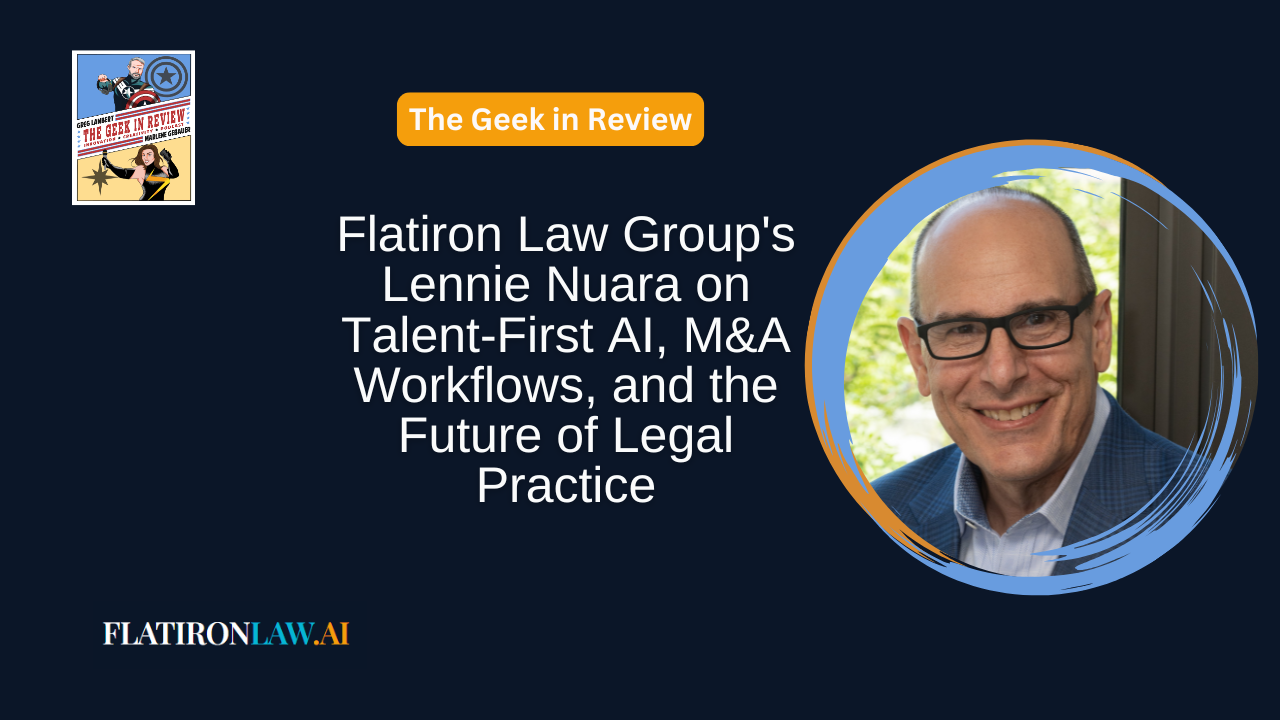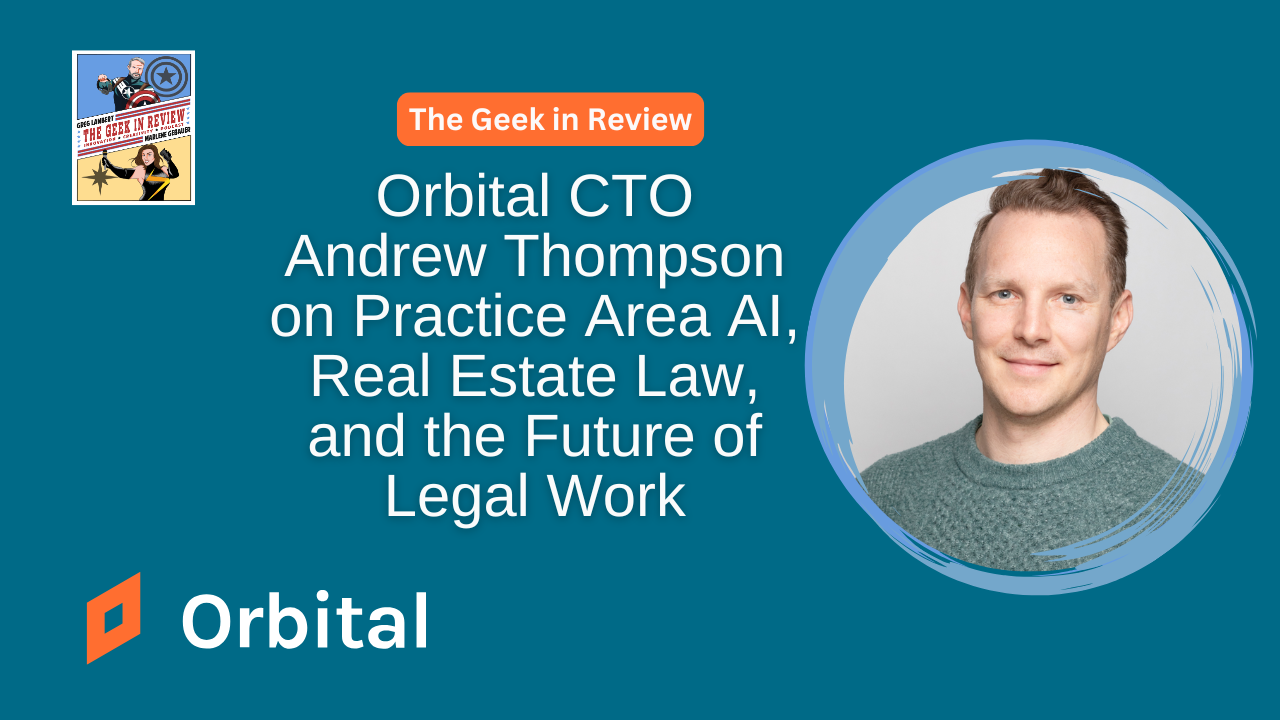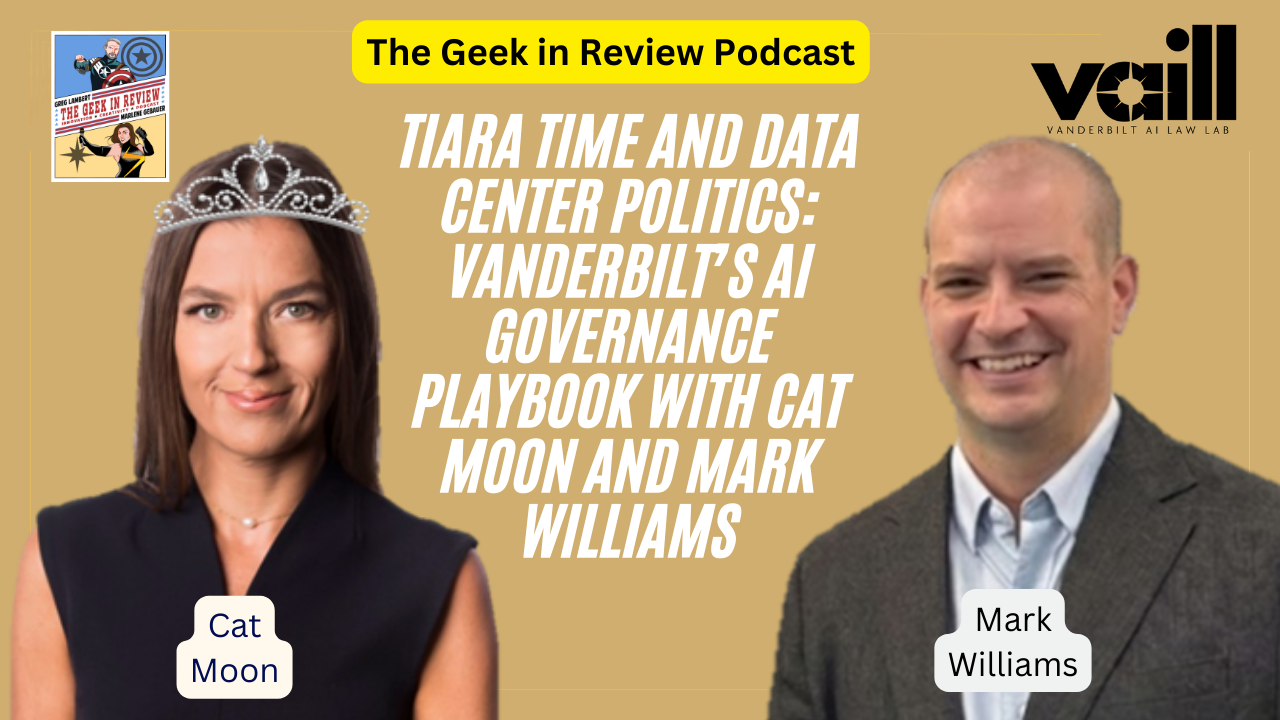
Cat Moon and Mark Williams return to The Geek in Review wearing two hats, plus one tiara. The conversation starts at Vanderbilt’s inaugural AI Governance Symposium, where “governance” means wildly different things depending on who shows up. Judges, policy folks, technologists, in-house leaders, and law firm teams all brought separate definitions, then bumped into each other during generous hallway breaks. Those collisions led to new research threads and fresh coursework, which feels like the real product of a symposium, beyond any single panel.

One surprise thread moved from wonky sidebar to dinner-table topic fast, AI’s energy appetite and the rise of data centers as a local political wedge issue. Mark describes needing to justify the topic months earlier, then watching the news cycle catch up until no justification was needed. Greg connects the dots to Texas, where energy access, on-site generation, and data-center buildouts keep lawyers busy. The point lands, AI governance lives upstream from prompts and policies, down in grids, zoning fights, and infrastructure decisions.

From there, the episode pivots to training, law students, and the messy transition from “don’t touch AI” to “your platforms already baked AI into the buttons.” Mark shares how students now return from summer programs having seen tools like Harvey, even if firms still look like teams building the plane during takeoff. Cat frames the real need as basic, course-by-course guidance so students gain confidence instead of fear. Greg adds a perfect artifact from the academic arms race, Exam Blue Book sales jumping because handwritten exams keep AI out of finals, while AI still helps study through tools like NotebookLM quiz generation.

Governance talk gets practical fast, procurement, contract language, standards, and the sneaky problem of feature drift inside approved tools. Mark flags how smaller firms face a brutal constraint problem, limited budget, limited time, one shot to pick from hundreds of products, and no dedicated procurement bench. ISO 42001 shows up as a shorthand signal for vendor maturity, though standards still lag behind modern generative systems. Marlene brings the day-to-day friction, outside counsel guidelines, client consent, and repeated approvals slow adoption even after a tool passes internal reviews. Greg nails the operational pain, vendors ship new capabilities weekly, sometimes pushing teams from “closed universe” to “open internet” without much warning.

The closing crystal ball lands on collaboration and humility. Cat argues for a future shaped by co-creation across firms, schools, and students, not a demand-and-defend standoff about “practice-ready” graduates. Mark zooms out to the broader shift in the knowledge-work apprenticeship model, fewer beginner reps, earlier specialization pressure, and new ownership models knocking on the door in places like Tennessee. Along the way, Cat previews Women + AI Summit 2.0, with co-created content, travel stipends for speakers, workshops built around take-home artifacts, plus a short story fiction challenge to write women into the future narrative, tiara energy optional but encouraged.

Listen on mobile platforms:  ⁠⁠⁠⁠⁠⁠⁠⁠⁠⁠⁠⁠⁠⁠Apple Podcasts⁠⁠⁠⁠⁠⁠⁠⁠⁠⁠⁠⁠⁠⁠ |  ⁠⁠⁠⁠⁠⁠⁠⁠⁠⁠⁠⁠⁠⁠Spotify⁠⁠⁠⁠⁠⁠⁠⁠⁠⁠⁠⁠⁠⁠ | ⁠⁠⁠⁠⁠⁠⁠⁠⁠⁠⁠⁠⁠YouTube⁠⁠⁠⁠⁠⁠⁠⁠⁠⁠

[Special Thanks to Legal Technology Hub for their sponsoring this episode.]

⁠⁠⁠⁠⁠Email: geekinreviewpodcast@gmail.com
Music: ⁠⁠⁠⁠⁠⁠⁠⁠⁠⁠⁠⁠⁠⁠⁠⁠⁠Jerry David DeCicca⁠⁠⁠⁠⁠⁠⁠⁠⁠

LINKS:

CAT MOON
Vanderbilt AI Law Lab
VAILL Substack
Women + AI Summit
Practising Law Institute (PLI)
American Arbitration Association (AAA)
Legal Technology Hub

MARK WILLIAMS
Hotshot Legal
The Information
Understanding AI (Timothy B. Lee)
One Useful Thing (Ethan Mollick)
SemiAnalysis
ISO/IEC 42001 standard overview
EU AI Act (Regulation (EU) 2024/1689)
Chip War (Chris Miller, publisher page)

Transcript

Continue Reading Tiara Time and Data Center Politics: Vanderbilt’s AI Governance Playbook with Cat Moon and Mark Williams

Judge Scott Schlegel of the Louisiana Fifth Circuit Court of Appeal joins The Geek in Review for a candid, funny, and unflinchingly practical conversation about AI inside the judicial system. Schlegel wears multiple hats, appellate judge, former prosecutor, reform-minded builder, plus a podcaster and Substack writer who speaks plainly about what works and what fails when technology hits real people on real timelines. The throughline stays consistent, courts do not need more hype, courts need competence, guardrails, and a process mindset.

Judge Schlegel tackles the messy reality of AI disclosures, certifications, and uneven court rules across jurisdictions. His core message lands fast, judicial authority lives with the judge, not an AI system. From there, he outlines why chambers guidance matters, along with a structured, step-by-step approach for responsible drafting support, including prompt discipline and workflow thinking. The goal stays simple, faster decisions without surrendering judgment to “bot overlords.”

The discussion then shifts to constraints judges live with every day, budgets, procurement rules, security anxiety, and the gap between shiny vendor demos and courthouse reality. Schlegel argues for a scrappy, process-first approach using small pilots, one chambers, one workflow, one measurable result. He compares the moment to early “cloud” adoption lessons, pay for the right security, avoid free tools where the user becomes the product, and treat sensitive records with strict care. Courts will see broader adoption as enterprise-grade options become attainable and baked into trusted platforms.

Then comes the part that lingers in your head after the episode ends, deepfakes and voice cloning as a near-term threat to due process, especially in domestic violence and protective order contexts. Schlegel explains why judges tend to err on the side of safety, and why “damage done” shows up long before expert testimony arrives. His practical recommendation focuses on pretrial practice, require disclosure, surface manipulation concerns early, and reduce surprises at trial. He even shares a simple family safety habit, a private “secret word” to confirm identity during urgent calls, since voice cloning tools lower the barrier for fraud.

Finally, Schlegel offers a sharp warning about confirmation bias, large language models often aim to please the user, which benefits advocates and harms neutral decision-making. His answer: an “AI alignment test” mindset, deliberate prompting, and refusal to outsource the white-page moment to a model. For the future, he points toward structural change courts rarely receive funding for, true legal technologists who redesign case management and public-facing guidance at scale. If courts stop printing emails and living in wire baskets, progress follows, and yes, somewhere in a parallel universe, Schlegel still wants a hologram machine.

Links

Judge Schlegel, his court, and his work

AI-in-courts guidance, plus his newsletter

Deepfakes, provenance, and content credentials

  • C2PA, Coalition for Content Provenance and Authenticity, “About” page. C2PA

Listen on mobile platforms:  ⁠⁠⁠⁠⁠⁠⁠⁠⁠⁠⁠⁠⁠⁠Apple Podcasts⁠⁠⁠⁠⁠⁠⁠⁠⁠⁠⁠⁠⁠⁠ |  ⁠⁠⁠⁠⁠⁠⁠⁠⁠⁠⁠⁠⁠⁠Spotify⁠⁠⁠⁠⁠⁠⁠⁠⁠⁠⁠⁠⁠⁠ | ⁠⁠⁠⁠⁠⁠⁠⁠⁠⁠⁠⁠⁠YouTube⁠⁠⁠⁠⁠⁠⁠⁠⁠⁠

[Special Thanks to Legal Technology Hub for their sponsoring this episode.]

⁠⁠⁠⁠⁠Email: geekinreviewpodcast@gmail.com
Music: ⁠⁠⁠⁠⁠⁠⁠⁠⁠⁠⁠⁠⁠⁠⁠⁠⁠Jerry David DeCicca⁠⁠⁠⁠⁠⁠⁠⁠⁠

Transcript

Continue Reading Bot Overlords, Deepfakes, and the Weight of the Robe: Judge Scott Schlegel on AI in the Courts

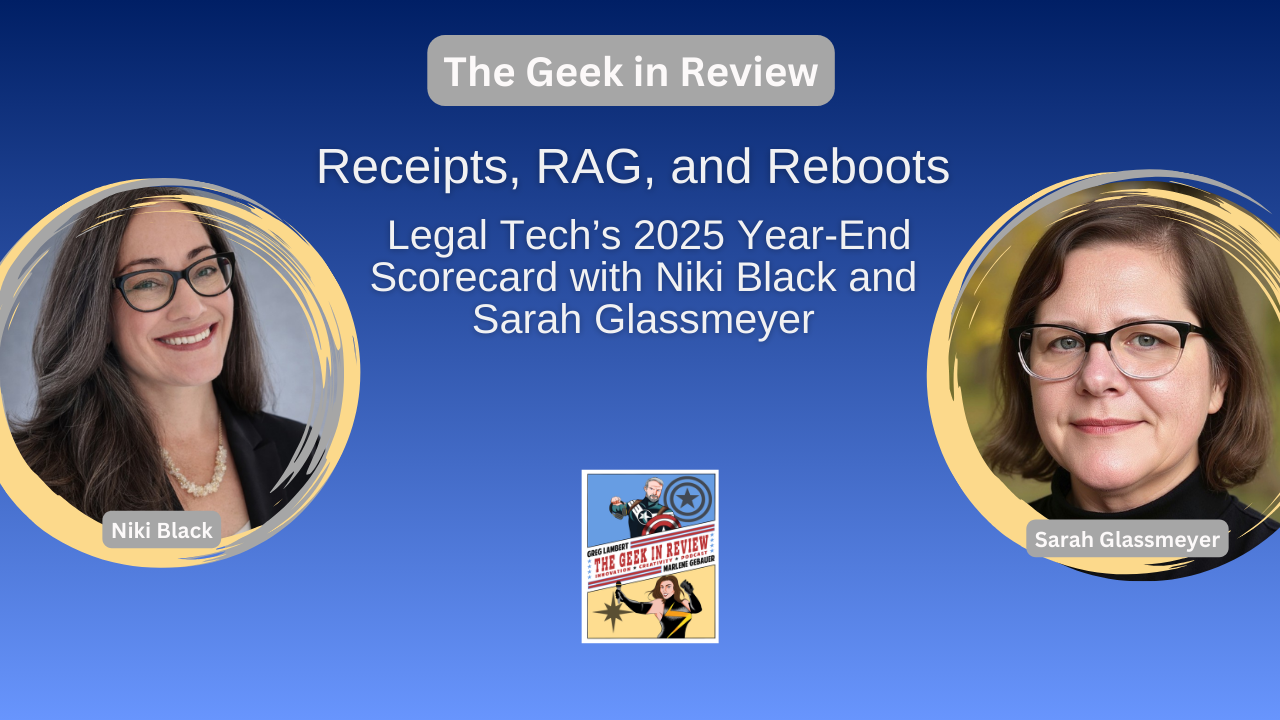
The Geek in Review closes 2025 with Greg Lambert and Marlene Gebauer welcoming back Sarah Glassmeyer and Niki Black for round two of the annual scorecard, equal parts receipts, reality check, and forward look into 2026. The conversation opens with a heartfelt remembrance of Kim Stein, a beloved KM community builder whose generosity showed up in conference dinners, happy hours, and day to day support across vendors and firms. With Kim’s spirit in mind, the panel steps into the year-end ritual: name the surprises, own the misses, and offer a few grounded bets for what comes next.

Last year’s thesis predicted a shift from novelty to utility, yet 2025 felt closer to a rolling hype loop. Glassmeyer frames generative AI as a multi-purpose knife dropped on every desk at once, which left many teams unsure where to start, even when budgets already committed. Black brings the data lens: general-purpose gen AI use surged among lawyers, especially solos and small firms, while law firm adoption rose fast compared with earlier waves such as cloud computing, which crawled for years before pandemic pressure moved the needle. The group also flags a new social dynamic, status-driven tool chasing, plus a quiet trend toward business-tier ChatGPT, Gemini, and Claude as practical options for many matters when price tags for legal-only platforms sit out of reach for smaller shops.

Hallucinations stay on the agenda, with the panel resisting both extremes: doom posts and fan club hype. Glassmeyer recounts a founder’s quip, “hallucinations are a feature, not a bug,” then pivots to an older lesson from KeyCite and Shepard’s training: verification never goes away, and lawyers always owed diligence, even before LLMs. Black adds a cautionary tale from recent sanctions, where a lawyer ran the same research through a stack of tools, creating a telephone effect and a document nobody fully controlled. Lambert notes a bright spot from the past six months: legal research outputs improved as vendors paired vector retrieval with legal hierarchy data, including court relationships and citation treatment, reducing off-target answers even while perfection stays out of reach.

From there, the conversation turns to mashups across the market. Clio’s acquisition of vLex becomes a headline example, raising questions about platform ecosystems, pricing power, and whether law drifts toward an Apple versus Android split. Black predicts integration work across billing, practice management, and research will matter as much as M&A, with general tech giants looming behind the scenes. Glassmeyer cheers broader access for smaller firms, while still warning about consolidation scars from legal publishing history and the risk of feature decay once startups enter corporate layers. The panel lands on a simple preference: interoperability, standards, and clean APIs beat a future where a handful of owners dictate terms.

On governance, Black rejects surveillance fantasies and argues for damage control, strong training, and safe experimentation spaces, since shadow usage already happens on personal devices. Gebauer pushes for clearer value stories, and the guests agree early ROI shows up first in back office workflows, with longer-run upside tied to pricing models, AFAs, and buyer pushback on inflated hours. For staying oriented amid fractured social channels, the crew trades resources: AI Law Librarians, Legal Tech Week, Carolyn Elefant’s how-to posts, Moonshots, Nate B. Jones, plus Ed Zitron’s newsletter for a wider business lens. The crystal ball segment closes with a shared unease around AI finance, a likely shakeout among thinly funded tools, and a reminder to keep the human network strong as 2026 arrives.

Sarah Glassmeyer

Niki Black

Marlene Gebauer

Greg Lambert

Transcript

Continue Reading Receipts, RAG, and Reboots: Legal Tech’s 2025 Year-End Scorecard with Niki Black and Sarah Glassmeyer

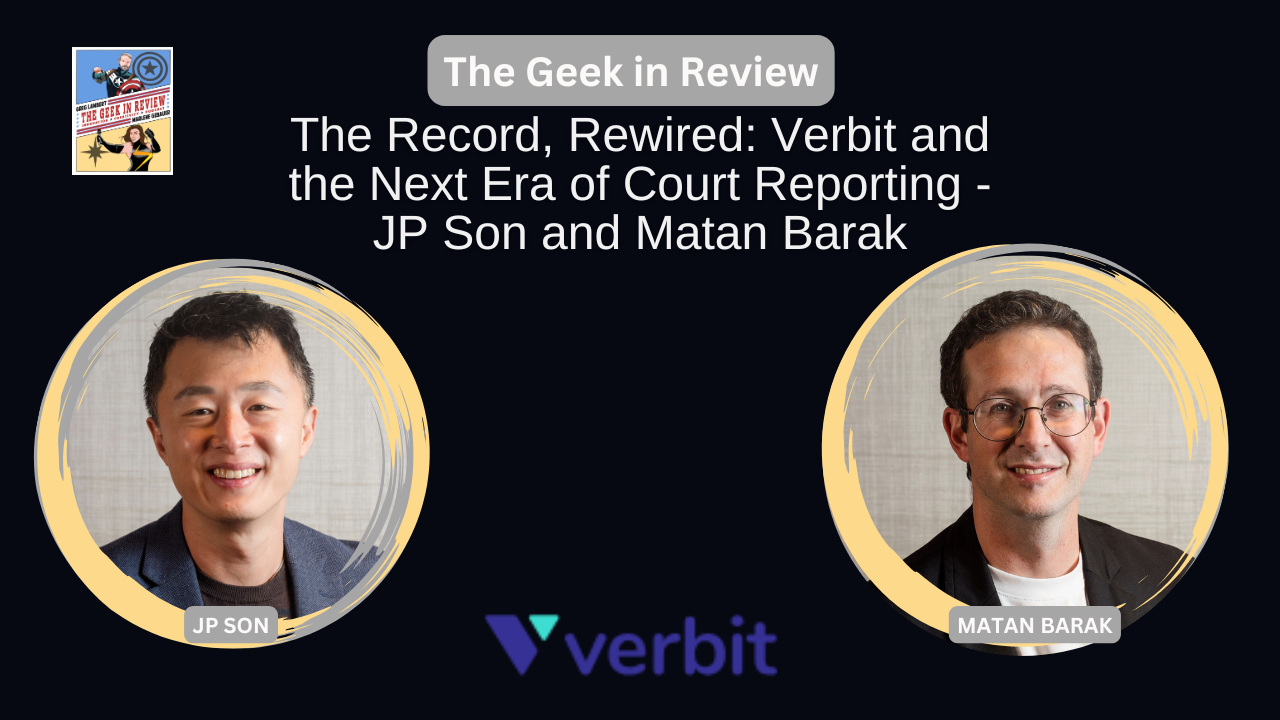
For decades, “the record” has meant one thing: a text transcript built by skilled stenographers, trusted by courts, and treated as the backbone of due process. In this episode of The Geek in Review, Marlene Gebauer and Greg Lambert sit down with JP Son, Verbit’s Chief Legal Officer, and Matan Barak, Head of Legal Product, to talk about what happens when a labor shortage, rising demand, and better speech technology collide. Verbit has been in legal work since day one, supporting court reporting agencies behind the scenes, but their latest push aims to modernize the full arc of proceedings, from depositions through courtroom workflows, with faster turnaround and more usable outputs.

A core tension sits at the center of the conversation: innovation versus legitimacy. Marlene presses on whether digital records carry the same defensibility as stenographic ones, and JP frames Verbit’s posture as support, not replacement. Verbit is not a court reporting agency; their angle is tooling that helps certified professionals and agencies produce better outcomes, including real-time workflows that once required heavy manual effort. The result is less “robots replace reporters” and more “reporters with better gear,” which feels like the only way this transition avoids an industry food fight in every courthouse hallway.

From there, the discussion shifts into the practical, lawyer-facing side: LegalVisor as a “virtual second chair.” JP describes it as distinct from the official transcript, a real-time layer built to surface insights, track progress, and support strategy while the deposition is happening. Matan adds the design story, discovery work, shadowing, and interviews to build for what second chairs are already doing, hunting inconsistencies, chasing exhibits, and keeping the outline on track. A key theme: the transcript is not going away, because lawyers still rely on it for clients, remote teammates, and quick backtracking, but the value climbs when the transcript turns into a live workspace with search, references, and outline coverage in front of you while testimony unfolds.

Accuracy and trust show up as recurring guardrails. Greg pokes at the “99 percent accurate” claims floating around the market, and Matan makes the point every litigator appreciates, the missing one percent contains the word that flips meaning. Verbit’s “human in the loop” posture and its Captivate approach focus on pushing accuracy toward the level legal settings require, including case-specific preparation by extracting names and terms from documents to tune recognition in context. The episode also tackles confidentiality head-on, with JP drawing a hard line: Verbit does not use client data to train generative models, and they keep business pipelines separate across verticals.

Finally, the crystal ball question lands where courts love to resist, changing the definition of “the record.” Marlene asks whether the future record becomes searchable, AI-tagged video rather than text-first transcripts. JP says not soon, pointing to centuries of text-based infrastructure and the slow grind of institutional acceptance. Matan calls the shift inevitable, arriving in pieces, feature by feature, so the system evolves without pretending it is swapping the engine mid-flight. Along the way, there are glimpses of what comes next, including experiments borrowing media tech, such as visual description to interpret behavior cues in video. The big takeaway feels simple: the record stays sacred, but the work around it no longer needs to stay stuck.

Listen on mobile platforms:  ⁠⁠⁠⁠⁠⁠⁠⁠⁠⁠⁠⁠⁠⁠Apple Podcasts⁠⁠⁠⁠⁠⁠⁠⁠⁠⁠⁠⁠⁠⁠ |  ⁠⁠⁠⁠⁠⁠⁠⁠⁠⁠⁠⁠⁠⁠Spotify⁠⁠⁠⁠⁠⁠⁠⁠⁠⁠⁠⁠⁠⁠ | ⁠⁠⁠⁠⁠⁠⁠⁠⁠⁠⁠⁠⁠YouTube⁠⁠⁠⁠⁠⁠⁠⁠⁠⁠

[Special Thanks to Legal Technology Hub for their sponsoring this episode.]

⁠⁠⁠⁠⁠Email: geekinreviewpodcast@gmail.com
Music: ⁠⁠⁠⁠⁠⁠⁠⁠⁠⁠⁠⁠⁠⁠⁠⁠⁠Jerry David DeCicca⁠⁠⁠⁠⁠⁠⁠⁠⁠

Transcript:

Continue Reading The Record, Rewired: Verbit and the Next Era of Court Reporting – JP Son and Matan Barak

Artificial intelligence has moved fast, but trust has not kept pace. In this episode, Nam Nguyen, co-founder and COO of TruthSystems.ai, joins Greg Lambert and Marlene Gebauer to unpack what it means to build “trust infrastructure” for AI in law. Nguyen’s background is unusually cross-wired—linguistics, computer science, and applied AI research at Stanford Law—giving him a clear view of both the language and logic behind responsible machine reasoning. From his early work in Vietnam to collaborations at Stanford with Dr. Megan Ma, Nguyen has focused on a central question: who ensures that the systems shaping legal work remain safe, compliant, and accountable?

Nguyen explains that TruthSystems emerged from this question as a company focused on operationalizing trust, not theorizing about it. Rather than publishing white papers on AI ethics, his team builds the guardrails law firms need now. Their platform, Charter, acts as a governance layer that can monitor, restrict, and guide AI use across firm environments in real time. Whether a lawyer is drafting in ChatGPT, experimenting with CoCounsel, or testing Copilot, Charter helps firms enforce both client restrictions and internal policies before a breach or misstep occurs. It’s an attempt to turn trust from a static policy on a SharePoint site into a living, automated practice.

A core principle of Nguyen’s work is that AI should be both the subject and the infrastructure of governance. In other words, AI deserves oversight but is also uniquely suited to implement it. Because large language models excel at interpreting text and managing unstructured data, they can help detect compliance or ethical risks as they happen. TruthSystems’ vision is to make governance continuous and adaptive, embedding it directly into lawyers’ daily workflows. The aim is not to slow innovation, but to make it sustainable and auditable.

The conversation also tackles the myth of “hallucination-free” systems. Nguyen is candid about the limitations of retrieval-augmented generation, noting that both retrieval and generation introduce their own failure modes. He argues that most models have been trained to sound confident rather than be accurate, penalizing expressions of uncertainty. TruthSystems takes the opposite approach, favoring smaller, predictable models that reward contradiction-spotting and verification. His critique offers a reminder that speed and safety in AI rarely coexist by accident—they must be engineered together.

Finally, Nguyen discusses TruthSystems’ recent $4 million seed round, led by Gradient Ventures and Lightspeed, which will fund the expansion of their real-time visibility tools and firm partnerships. He envisions a future where firms treat governance not as red tape but as a differentiator, using data on AI use to assure clients and regulators alike. As he puts it, compliance will no longer be the blocker to innovation—it will be the proof of trust at scale.

Listen on mobile platforms:  ⁠⁠⁠⁠⁠⁠⁠⁠⁠⁠⁠⁠⁠⁠Apple Podcasts⁠⁠⁠⁠⁠⁠⁠⁠⁠⁠⁠⁠⁠⁠ |  ⁠⁠⁠⁠⁠⁠⁠⁠⁠⁠⁠⁠⁠⁠Spotify⁠⁠⁠⁠⁠⁠⁠⁠⁠⁠⁠⁠⁠⁠ | ⁠⁠⁠⁠⁠⁠⁠⁠⁠⁠⁠⁠⁠YouTube⁠⁠⁠⁠⁠⁠⁠⁠⁠⁠

[Special Thanks to Legal Technology Hub for their sponsoring this episode.]

⁠⁠⁠⁠⁠Email: geekinreviewpodcast@gmail.com
Music: ⁠⁠⁠⁠⁠⁠⁠⁠⁠⁠⁠⁠⁠⁠⁠⁠⁠Jerry David DeCicca⁠⁠⁠⁠⁠⁠⁠⁠⁠

Transcript:

Continue Reading Trust at Scale: Nam Nguyen on How TruthSystems is Building the Framework for Safe AI in Law

Few people understand the intersection of legal practice, data analytics, and diversity like Catherine Krow, Managing Director of Diversity and Impact Analytics at BigHand. In this episode of The Geek in Review, hosts Greg Lambert and Marlene Gebauer sit down with Krow to trace her journey from a high-powered trial lawyer to an influential legal tech leader. After seventeen years at firms like Orrick and Simpson Thacher, Krow’s turning point came when a client challenged her team’s billing after a major courtroom victory—a moment that sparked her mission to fix what she calls the “business of law.”

That single moment led to the creation of Digitory Legal, a company designed to give law firms the data and transparency they desperately needed but didn’t yet value. Krow describes how her framework—plan, measure, refine—became the basis for improving cost predictability and strengthening client trust. When BigHand acquired Digitory Legal in 2022, Krow’s vision found a larger stage. Now, her “data refinery” powers better pricing, resource allocation, and even equity within firms. As she explains, clean data doesn’t only improve profitability, it reveals hidden inequities in work allocation and helps firms retain their most promising talent.

Krow also digs into one of her favorite topics: “data debt.” Law firms are drowning in data but starved for information. She explains how poor data hygiene—like inconsistent time codes and messy narratives—has left firms unable to use their most valuable resource. BigHand’s impact analytics tools attack this problem head-on, transforming raw billing data into usable intelligence that drives decision-making across finance, staffing, and diversity efforts. And while the technology is powerful, Krow is clear that solving data debt is as much a cultural challenge as it is a technical one.

Another major theme is the evolving role of business professionals within law firms. Krow argues that lawyers’ traditional discomfort with financial forecasting and project management is holding firms back. Her solution? Combine legal expertise with the commercial acumen of allied professionals. Together, they can meet client demands for budgets, accountability, and measurable value—especially as AI begins to reshape how legal services are delivered and priced.

The episode closes with Krow’s broader reflection on the next decade of legal innovation. She warns that the biggest shift ahead isn’t about AI or analytics—it’s about mindset. Firms that embrace data-driven decision-making now will define the future of law; those that don’t will be left behind. Through her work at BigHand, Krow is helping to ensure that future is both more efficient and more equitable.

Links:

Listen on mobile platforms:  ⁠⁠⁠⁠⁠⁠⁠⁠⁠⁠⁠⁠⁠⁠Apple Podcasts⁠⁠⁠⁠⁠⁠⁠⁠⁠⁠⁠⁠⁠⁠ |  ⁠⁠⁠⁠⁠⁠⁠⁠⁠⁠⁠⁠⁠⁠Spotify⁠⁠⁠⁠⁠⁠⁠⁠⁠⁠⁠⁠⁠⁠ | ⁠⁠⁠⁠⁠⁠⁠⁠⁠⁠⁠⁠⁠YouTube⁠⁠⁠⁠⁠⁠⁠⁠⁠⁠

[Special Thanks to Legal Technology Hub for their sponsoring this episode.]

⁠⁠⁠⁠⁠Email: geekinreviewpodcast@gmail.com
Music: ⁠⁠⁠⁠⁠⁠⁠⁠⁠⁠⁠⁠⁠⁠⁠⁠⁠Jerry David DeCicca⁠⁠⁠⁠⁠⁠⁠⁠⁠

Transcript:

Continue Reading Data Debt, Diversity, and the Business of Law: A Conversation with BigHand’s Catherine Krow

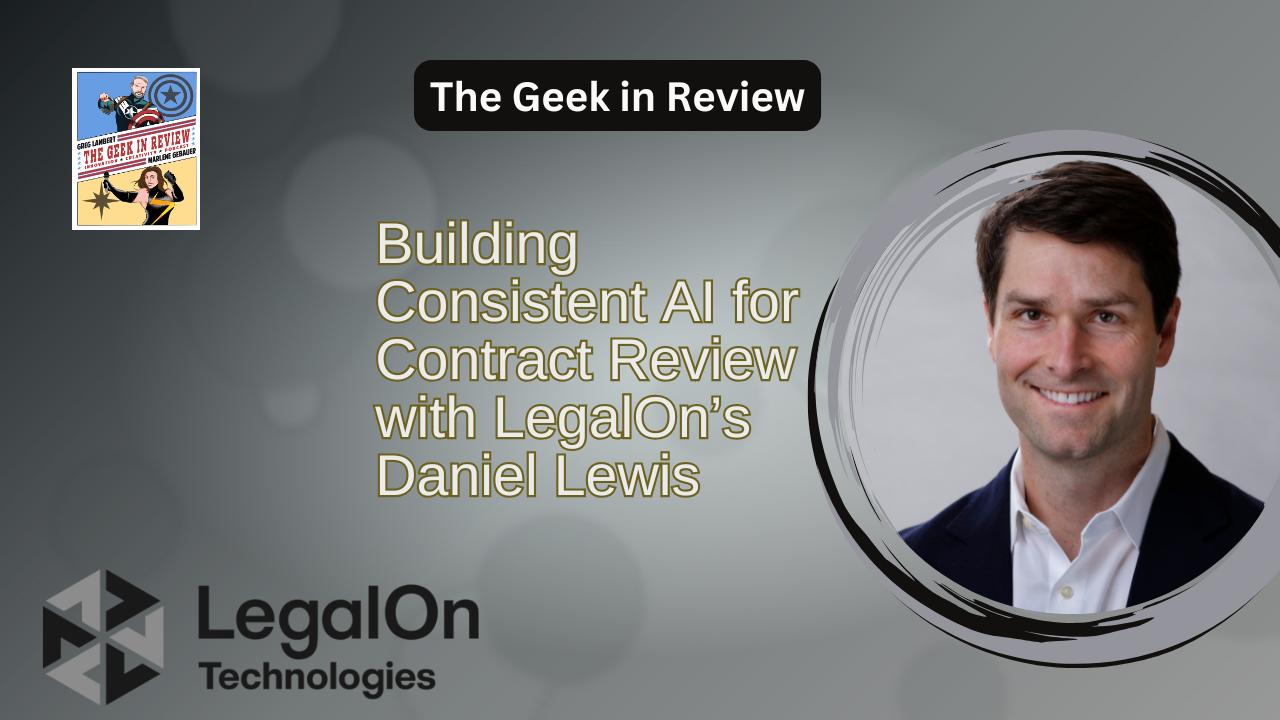
Daniel Lewis joins us this week to trace a path from Ravel Law to LexisNexis to LegalOn, with a throughline of data-driven thinking and practical outcomes for lawyers. Stanford roots shaped early work on judicial analytics, then a front-row view inside a global publisher broadened focus to content, guidance, and the daily reality of in-house teams. That experience pointed straight at contract review as a top pain for corporate counsel, which led to LegalOn’s product mission and global push.

Data access still shapes progress. Case law digitization advanced through projects like Harvard’s archive, yet comprehensive coverage, secondary sources, and news remain guarded by incumbents. Daniel explains why large datasets give scale, why startups face steep hurdles, and why thoughtful product scope matters. The lesson, build where data, workflow, and user value intersect.

LegalOn’s hybrid approach blends large models with attorney-built playbooks, practice notes, and suggested clause language. Consistency matters more than clever one-offs, so reviews align to standards, not model whimsy. Daniel shares a memorable demo from a rival where a phantom “California Code section 17” alert appeared, a cautionary tale that underscores the need for guardrails, verification, and explainability.

Conversation turns to multi-step agents and matter management. Picture an intake email from sales, missing key fields. An agent requests what is needed, opens a matter, applies a tailored playbook, highlights non-negotiables and fallbacks, then keeps stakeholders informed as work progresses. LegalOn also converts existing playbooks and prior redlines into AI-ready guidance, reducing setup chores while preserving organizational risk preferences.

Finally, Daniel outlines new muscles for legal teams. Daily AI usage shifts time from line-by-line edits to judgment, negotiation strategy, and process leadership. Tech fluency, business orientation, and change leadership rise in importance, along with a steady diet of outside-legal analysis from voices like Ben Thompson and Benedict Evans. The message, free lawyers from sludge, raise the ceiling on strategic work, and build for long-term improvement across the legal function.

Listen on mobile platforms:  ⁠⁠⁠⁠⁠⁠⁠⁠⁠⁠⁠⁠⁠⁠Apple Podcasts⁠⁠⁠⁠⁠⁠⁠⁠⁠⁠⁠⁠⁠⁠ |  ⁠⁠⁠⁠⁠⁠⁠⁠⁠⁠⁠⁠⁠⁠Spotify⁠⁠⁠⁠⁠⁠⁠⁠⁠⁠⁠⁠⁠⁠ | ⁠⁠⁠⁠⁠⁠⁠⁠⁠⁠⁠⁠⁠YouTube⁠⁠⁠⁠⁠⁠⁠⁠⁠⁠

[Special Thanks to Legal Technology Hub for their sponsoring this episode.]

⁠⁠⁠⁠⁠Email: geekinreviewpodcast@gmail.com
Music: ⁠⁠⁠⁠⁠⁠⁠⁠⁠⁠⁠⁠⁠⁠⁠⁠⁠Jerry David DeCicca⁠⁠⁠⁠⁠⁠⁠⁠⁠

Transcript:

Continue Reading Building Consistent AI for Contract Review with LegalOn’s Daniel Lewis

This week we are joined by Mirat Dave and Danish Butt of Swiftwater & Co. as they step into the studio to make a simple claim, investigations and legal operations should serve the business, not slow the business. Mirat traces a path across law, technology, and global risk, then explains why a team blending strategy with implementation drew him to Swiftwater. Danish shares a wry origin story from early e-discovery days and outlines Swiftwater’s north star, the seven C’s, connecting, caring, collaboration, creating, curiosity, courage, and confidence. The tone stays pragmatic, no hype, and a few laughs land along the way.

Global scope often triggers the “Germany is different” objection. Mirat acknowledges regional nuances, then reframes the discussion, most of the process is common across borders. The move that matters is standardization plus smart technology, including AI, to shift from linear headcount answers to scalable capacity. The payoff is speed, consistency, and lower risk. The team urges leaders to act like business owners, align processes to growth, margin, assets, and purpose, and resist the reflex to hire without redesigning the work.

Budget hurdles come next. Leaders struggle to win funds for process change or platforms, while headcount requests sail through. The fix is storytelling backed by math, present a structured plan, expected savings, and a clear ROI in the language a CFO or GC uses daily. Danish widens the lens on metrics, many teams still track counts and cycle times, while value measures like revenue protected or reputation preserved sit at the bottom of the list. The guidance is to flip that order, tie decisions to value, and approach AI as a set of pointed use cases with measurable outcomes, not a monolith.

Legal ops gets a moment in the spotlight as the quiet power. Danish reminds listeners that service functions exist to help the organization win, recognition matters, yet trust erodes when tools take center stage over results. Mirat presses the enablement mindset with a memorable image, legal, risk, and investigations are the pit crew, the business is the driver. Faster pits win races. He shares examples, a government contractor lifted renewal success by turning compliance visibility into proactive reminders and playbooks. In investigations, trend analysis by region, level, and timing surfaces fixes that reduce incoming allegations, lighten workloads, and raise quality.

The crystal ball stays practical. Danish advises teams to treat AI as a working style backed by a two-year plan, prepare data, pick targets, and avoid both freeze and frenzy. Mirat expects investigation platforms to evolve from reporting systems into work systems, triage, plan creation, interview guidance, and repeatable playbooks that lift speed and consistency.

Listen on mobile platforms:  ⁠⁠⁠⁠⁠⁠⁠⁠⁠⁠⁠⁠⁠⁠Apple Podcasts⁠⁠⁠⁠⁠⁠⁠⁠⁠⁠⁠⁠⁠⁠ |  ⁠⁠⁠⁠⁠⁠⁠⁠⁠⁠⁠⁠⁠⁠Spotify⁠⁠⁠⁠⁠⁠⁠⁠⁠⁠⁠⁠⁠⁠ | ⁠⁠⁠⁠⁠⁠⁠⁠⁠⁠⁠⁠⁠YouTube⁠⁠⁠⁠⁠⁠⁠⁠⁠⁠

[Special Thanks to Legal Technology Hub for their sponsoring this episode.]

Blue Sky: ⁠@geeklawblog.com⁠ ⁠@marlgeb⁠
⁠⁠⁠⁠⁠Email: geekinreviewpodcast@gmail.com
Music: ⁠⁠⁠⁠⁠⁠⁠⁠⁠⁠⁠⁠⁠⁠⁠⁠⁠Jerry David DeCicca⁠⁠⁠⁠⁠⁠⁠⁠⁠

Transcript:

Continue Reading Pit Crews, Seven C’s, and AI: Mirat Dave and Danish Butt from Swiftwater & Co.

This week, we welcome back Kara Peterson and Rich DiBona of Descrybe to talk about the company’s rapid growth and its expanding role in legal research. Since their last appearance, Descrybe has not only built out new tools but also entered academia by joining the curriculum of more than 350 universities around the world. Kara reflects on her earlier career in legal education and how this new partnership feels like coming full circle. Together, she and Rich share how Descrybe is positioning itself to fill the gap left by other providers while keeping affordability and accessibility at the core of their mission.

A major highlight of the discussion is Descrybe’s unique approach to legal citators. Unlike traditional tools that often provide a blunt “treatment” of a case, Descrybe’s citator allows issue-level analysis and even introduces a “backwards citator.” This means researchers can see not only how later courts interpreted a case but also how the judges who wrote the opinion cited and treated earlier authorities. Rich explains the technical challenges involved in training their system on 30 million citations, while Kara describes how these innovations give researchers new storytelling and analytical power when building arguments.

The conversation also dives into the Legal Research Toolkit, Descrybe’s paid tier that offers a collection of tools designed for professionals who need more advanced case law analysis. While the company continues to provide free access to its core research platform, the toolkit adds features such as issue explorers and advanced citator functions. Kara emphasizes the company’s deliberately simple pricing model, which prioritizes trust and accessibility. At just $10 a month for non-commercial use and $20 for commercial users, the service is priced more like everyday software than the traditional high-cost legal research platforms.

The discussion moves into broader industry trends, including the wave of acquisitions by major players like Thomson Reuters and Clio. Kara and Rich note that while consolidation is reshaping the market, it also leaves space for new entrants to innovate. With data becoming the most valuable commodity in legal tech, Descrybe is building curated and clean datasets across statutes, regulations, state constitutions, and even attorney general opinions. Both guests highlight the importance of accuracy, data hygiene, and minimizing hallucinations, explaining how their closed-system approach helps ensure that results remain grounded in actual legal documents rather than speculative AI outputs.

Finally, the episode touches on ethics, recognition, and the future. Descrybe recently won the Anthem Award for Ethical AI, a nod to its safeguards against hallucinations and commitment to transparent data practices. At ILTACon, the team found themselves impressing not only potential clients but also leaders from larger companies who were curious about how such a lean startup was able to achieve so much. Looking ahead, Kara predicts the pace of change in legal technology will only accelerate, challenging law firms to keep up, while Rich warns of the commoditization of AI capabilities and stresses the importance of staying ahead of the curve. Together, they bring both humor and insight, reminding listeners that the legal research market is shifting quickly and that affordability, accuracy, and ethics will shape its next chapter.

Listen on mobile platforms:  ⁠⁠⁠⁠⁠⁠⁠⁠⁠⁠⁠⁠⁠⁠Apple Podcasts⁠⁠⁠⁠⁠⁠⁠⁠⁠⁠⁠⁠⁠⁠ |  ⁠⁠⁠⁠⁠⁠⁠⁠⁠⁠⁠⁠⁠⁠Spotify⁠⁠⁠⁠⁠⁠⁠⁠⁠⁠⁠⁠⁠⁠ | ⁠⁠⁠⁠⁠⁠⁠⁠⁠⁠⁠⁠⁠YouTube⁠⁠⁠⁠⁠⁠⁠⁠⁠⁠

[Special Thanks to Legal Technology Hub for their sponsoring this episode.]

Blue Sky: ⁠@geeklawblog.com⁠ ⁠@marlgeb⁠
⁠⁠⁠⁠⁠Email: geekinreviewpodcast@gmail.com
Music: ⁠⁠⁠⁠⁠⁠⁠⁠⁠⁠⁠⁠⁠⁠⁠⁠⁠Jerry David DeCicca⁠⁠⁠⁠⁠⁠⁠⁠⁠

Transcript:

Continue Reading The Cytator Strikes Back: Kara Peterson & Rich DiBona On Descrybe’s Fresh Take on Legal Research

In this episode, we welcome Matthew Dickinson, CEO and founder of Vable, to discuss the rapidly changing landscape of legal information and current awareness. Matthew reflects on how, until recently, current awareness in law firms relied heavily on manual curation, Boolean searches, and email alerts—often resulting in information overload and a lack of personalization. With the advent of generative AI, expectations have shifted dramatically. Lawyers now want more than just a flood of articles; they expect relevant, actionable insights delivered seamlessly and intuitively, tailored to their specific needs and workflows.

Matthew explains how Vable and similar platforms are moving beyond simply delivering news. The goal is to provide context-rich, actionable intelligence that integrates with other firm systems, such as CRM platforms. Instead of sending a list of articles about data breaches, for example, the new approach is to alert lawyers when a top client is affected, summarize the implications, and identify who else in the firm needs to know. This shift requires a blend of robust technology, thoughtful workflow design, and a deep understanding of the different roles within a law firm.

A significant portion of the conversation centers on the ethical boundaries of using AI in legal information services. Matthew outlines four pillars for ethical current awareness: trust, transparency, accuracy, and inclusion. He emphasizes the importance of clear labeling when AI is used, maintaining high standards for accuracy (especially for client-facing content), and ensuring a diversity of sources to avoid echo chambers. Vable’s approach includes strong relationships with publishers, transparent rights management, and tools that allow human review and curation before information is distributed.

Matthew discuss best practices for using news and current awareness to support practice development and client engagement. While many firms still rely on newsletters and headlines, there is a growing trend toward more personalized, branded, and interactive content—such as Vable Connect, which allows firms to deliver tailored digests to clients. Automation is on the rise, but the human element remains crucial: lawyers use curated content as a springboard for client conversations, and AI is seen as a tool to empower, not replace, professional judgment.

As the episode wraps up, Matthew shares his perspective on the future of legal information services. He predicts that the next wave of innovation will bring even more personalization, prediction, and integration—potentially leading to “personalized current awareness bots” for every lawyer. However, he cautions that while AI can supercharge productivity, humans must remain in control, especially in high-stakes legal environments. The unique culture and high standards of law firms mean that technology providers must deeply understand their clients’ needs to build trust and deliver real value.

Listen on mobile platforms:  ⁠⁠⁠⁠⁠⁠⁠⁠⁠⁠⁠⁠⁠⁠Apple Podcasts⁠⁠⁠⁠⁠⁠⁠⁠⁠⁠⁠⁠⁠⁠ |  ⁠⁠⁠⁠⁠⁠⁠⁠⁠⁠⁠⁠⁠⁠Spotify⁠⁠⁠⁠⁠⁠⁠⁠⁠⁠⁠⁠⁠⁠ | ⁠⁠⁠⁠⁠⁠⁠⁠⁠⁠⁠⁠⁠YouTube⁠⁠⁠⁠⁠⁠⁠⁠⁠⁠

[Special Thanks to Legal Technology Hub for their sponsoring this episode.]

Blue Sky: ⁠@geeklawblog.com⁠ ⁠@marlgeb⁠
⁠⁠⁠⁠⁠Email: geekinreviewpodcast@gmail.com
Music: ⁠⁠⁠⁠⁠⁠⁠⁠⁠⁠⁠⁠⁠⁠⁠⁠⁠Jerry David DeCicca⁠⁠⁠⁠⁠⁠⁠⁠⁠

Transcript

Continue Reading Vable’s Matthew Dickinson on Current Awareness in the Age of GenAI