(See Day Two Coverage for the In-House Programs over on The Geek in Review Substack page – GL)

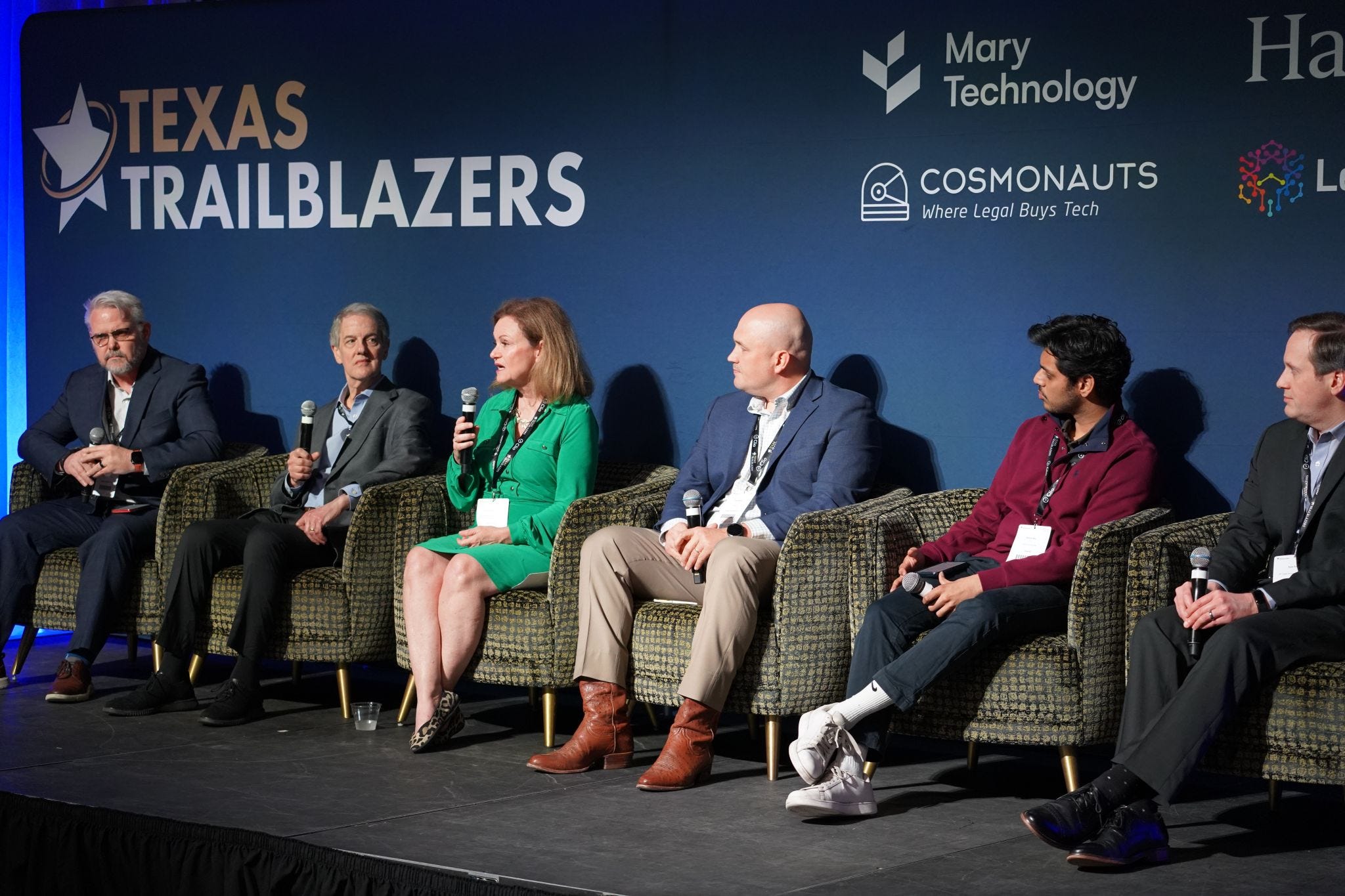
Day One of Texas Trailblazers in Dallas had a different tone than most legal tech conferences I attend. The conversations stayed close to the work. Less speculation, more discussion about what people are doing right now, where it is working, and where it is breaking.

Organized by Cosmonauts in partnership with LegalOps.com and held at The Statler Dallas, the Private Practice Day brought together law firm leaders, legal operations professionals, and technology vendors for a full day of keynotes, panels, and product demos. Joy Heath Rush, CEO of ILTA, chaired the day and opened with a fireside on the new era of conversations between general counsel and outside counsel. Her framing set the tone: AI is living at the intersection of business and technology, and it is creating conversations that simply did not exist two years ago.

Across the sessions and hallway conversations that followed, a few themes kept showing up. They were consistent whether the speaker came from a law firm, an in-house team, or a vendor building the tools.

Trust in AI is becoming a workflow problem

Rowan McNamee, Co-Founder and COO of Mary Technology, opened the sponsor keynote with a point that came up repeatedly throughout the day. AI outputs are persuasive. They read well. They look complete. That creates a tendency to move forward without enough friction in the process.

McNamee cited a recent study on what researchers call “cognitive surrender,” based on the work of Sean Hay and building on the framework in Thinking, Fast and Slow. Under time pressure, people rely on AI even when they know they should verify the result. In a series of experiments, override rates improved from 20% to 42% when participants had real money on the line. Even then, more than half still followed the AI’s answer. “You can reduce it, but you can’t eliminate it just by telling people to be careful,” McNamee noted.

In a legal setting, the implication is straightforward. Review cannot be optional. It has to be built into the process in a way that does not depend on someone remembering to slow down.

That concern echoed later in the day during the panel I moderated. Laura Ewing-Pearle, Senior Manager of eDiscovery and Practice Support Technology at Baker Botts, described a clear split even among e-discovery practitioners who are enthusiastic about AI. They lean heavily toward document interrogation and querying. They are far less comfortable with AI making responsiveness calls, and they are “definitely not comfortable with AI making privilege calls.” The line between assistance and reliance is still being worked out in real time.

Adding urgency to the conversation, panelists referenced a recent New York case in which a court ruled that AI-generated legal advice obtained through a public tool was not protected by attorney-client privilege. The ruling was specific to a consumer-facing chatbot, but the message landed clearly: enterprise AI tools with proper security and licensing are becoming a matter of professional risk management.

Adoption follows incentives, not access

The panel on Culture, Change, and Collaboration brought together Emma Dowden of Burges Salmon, Thom Wisinski of Haynes Boone, Kelley Lugo of Bryan Cave Leighton Paisner, Rowan McNamee, and Tammy Covert of Nachawati. The discussion stayed focused on what actually drives adoption inside organizations.Continue Reading What I Took Away from Texas Trailblazers

This week we are joined by Patrick DiDomenico and Kevin Klein, two longtime builders of knowledge programs and legal tech gatherings. They walk through the evolution of KM&I for Legal, now entering year three, and the debut of its co-located counterpart, Legal Tech Connect. Both events run in New York on October 22 and 23, with a single community, two distinct agendas, and one big goal, stronger conversations across buyers, builders, and backers of legal tech.

Patrick traces the roots, from the ARK KM era to the launch of KM\&I, then to twisting Kevin’s arm to join as a producer. A larger home opened the door to ambitious programming, Ease Hospitality at 3rd and 40th near Grand Central. Think bright rooms, live plants, strong AV, plenty of seating, and an adjacent tenant lounge with coffee, terrace, and breakout nooks. Lessons from last year show up in smart touches, an overflow room streaming the main stage for those who need to handle calls or email without missing core content, longer breaks for real conversations, and, yes, food worthy of repeat trips.

Format matters here. KM&I holds firm on peer-to-peer sessions led by law firm professionals. Providers participate through tight five-minute spotlights between talks, plus optional demo rooms during generous coffee breaks and lunch. Legal Tech Connect flips the lens, product stories on stage, founder journeys, market forces, and regulatory themes. A crossover ticket lets attendees roam freely between both programs. Breakouts return by popular demand, a C-suite roundtable, KM 101 for newcomers, a track for KM attorneys and PSLs, and a managers and directors forum that grew from attendee feedback.

Themes thread across both days. ROI from AI and KM tools appears throughout, from data strategy as a differentiator to co-development case studies. Expect a lively take on the rise of the legal engineer, with skills for scaling tools and driving adoption, plus a frank discussion about where these roles sit inside firms. Professor Michele DiStefano opens with client centricity, drawing on her research and book, with every attendee receiving a copy. She then moderates a session at Legal Tech Connect on how legal tech companies sell to law firms, bridging provider goals with buyer needs. Another panel stages the AI conversation among a partner, pricing director, client, and innovation lead, a timely look at value, billing, and collaboration.

The bigger story is community. Patrick and Kevin highlight the peer network that forms in hallways and over coffee, mentors found by chance, and ideas that travel home in workable form. Legal Tech Connect brings investors and founders into the mix, which raises the quality of dialogue on funding, product focus, and adoption. Looking ahead, they predict fewer conferences, higher quality bars, and a shift toward substance over appearance. Listeners who want more details, including registration, should visit kmniforlegal.com and legaltechconnect.com. The two events sit side by side in October, and the goal is simple, leave with practical ideas, new contacts, and a clearer view of where legal innovation heads next.

Listen on mobile platforms:  ⁠⁠⁠⁠⁠⁠⁠⁠⁠⁠⁠⁠⁠⁠Apple Podcasts⁠⁠⁠⁠⁠⁠⁠⁠⁠⁠⁠⁠⁠⁠ |  ⁠⁠⁠⁠⁠⁠⁠⁠⁠⁠⁠⁠⁠⁠Spotify⁠⁠⁠⁠⁠⁠⁠⁠⁠⁠⁠⁠⁠⁠ | ⁠⁠⁠⁠⁠⁠⁠⁠⁠⁠⁠⁠⁠YouTube⁠⁠⁠⁠⁠⁠⁠⁠⁠⁠

[Special Thanks to Legal Technology Hub for their sponsoring this episode.]

Blue Sky: ⁠@geeklawblog.com⁠ ⁠@marlgeb⁠
⁠⁠⁠⁠⁠Email: geekinreviewpodcast@gmail.com
Music: ⁠⁠⁠⁠⁠⁠⁠⁠⁠⁠⁠⁠⁠⁠⁠⁠⁠Jerry David DeCicca⁠⁠⁠⁠⁠⁠⁠⁠⁠

Transcript:

Continue Reading KM&I Meets Legal Tech Connect: Two Tracks, One Community with Patrick DiDomenico and Kevin Klein