If you haven’t seen Sal Khan’s TED Talk on how he has leveraged GPT-4 into his new offering of Khanmigo, then let me suggest that you spend 15 minutes of your time watching it. After watching it, continue on down the page for some thoughts that I had on how law firms could also
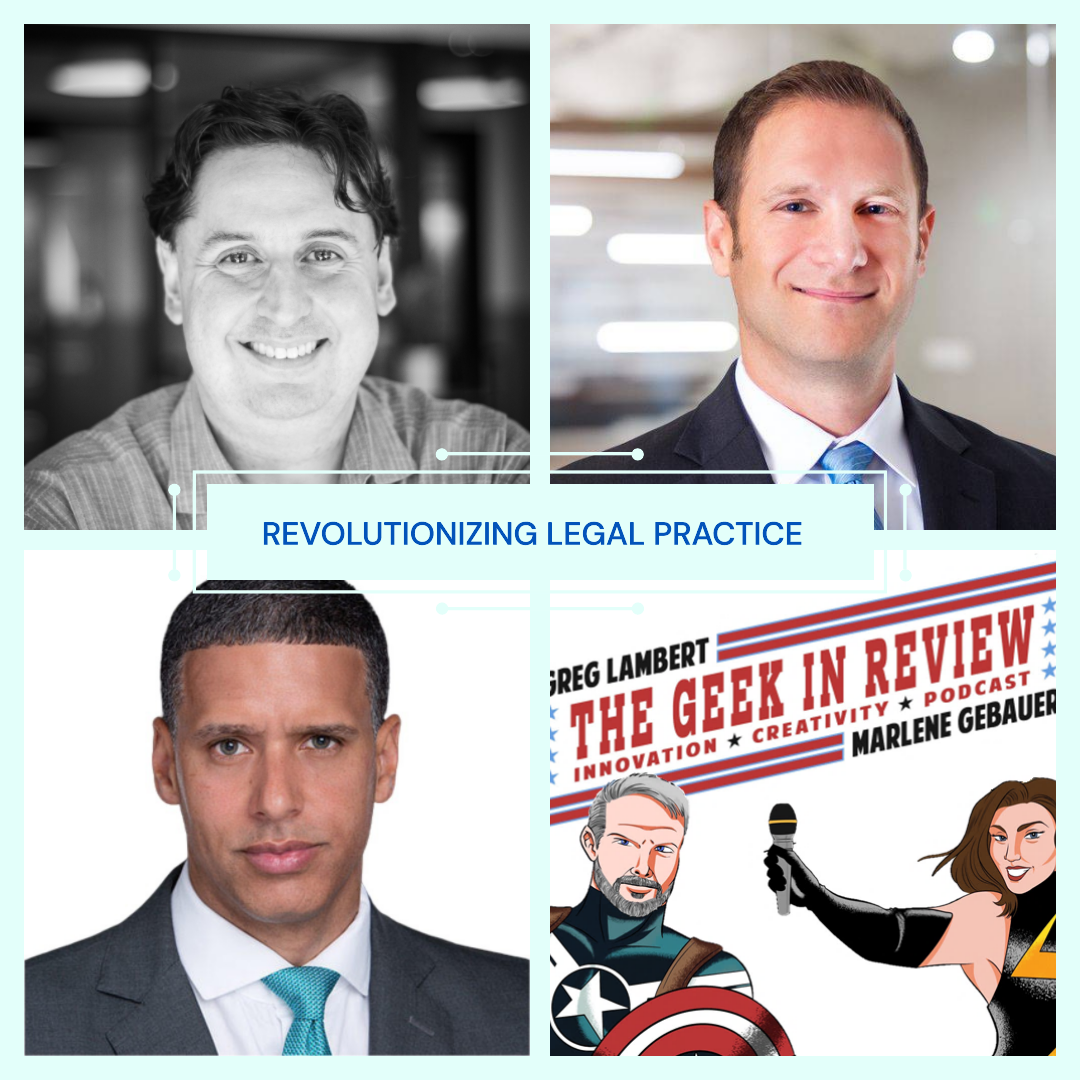
Revolutionizing Legal Practice: The Impact of CaseText’s CoCounsel on Law and Technology with Pablo Arredondo, Evan Shenkman, and Darth Vaughn (TGIR Ep. 199)
In this episode of “The Geek in Review,” hosts Greg Lambert and Marlene Gebauer engage in a fascinating conversation with legal technology experts Pablo Arredondo, Evan Shenkman, and Darth Vaughn. They discuss their proactive approach to incorporating AI technology, specifically CaseText’s CoCounsel, into their legal practice and business operations.
Pablo shares, “I think the law is such a fascinating space for this kind of AI because it really brings together two things that are really deep in the human experience, which is language and rules.” The guests discuss their experiences in using CoCounsel and its features, such as the ChatGPT feature, which enables them to draft and review documents more efficiently. Evan emphasizes, “The tools are there, and the more that we can sort of get folks up to speed on this stuff, and really help them understand how to use the tools, the better we’re all going to be.”
They explain how the integration of AI in their work has led to improved legal outcomes, happier clients, and better work-life balance for attorneys. Darth notes, “The legal industry tends to be a bit of a slow adopter of technology. It’s not because we’re not smart or we’re not hardworking. I think it’s because we’re risk-averse.”
Pablo, Evan, and Darth emphasize the importance of being passionate about leading the way in legal technology advancements. Pablo encourages listeners to embrace this technology with joy, rather than fear, to truly make a difference in their practice and industry. This positive approach helps them excel and bring others along on this transformative journey.
The discussion also touches on access to justice issues and how tools like CoCounsel can potentially help bridge the justice gap. By being intentional in utilizing AI technology to assist in pro bono cases, they believe it is possible to make a significant impact on improving access to legal services for those in need. Overall, this episode of “The Geek in Review” offers valuable insights into how AI and CaseText’s CoCounsel can revolutionize the legal industry. The guests’ passion and joy for embracing cutting-edge technology serve as an inspiration for others to follow suit and lead the way in transforming the legal landscape.
Listen on mobile platforms:
Apple Podcasts |
Spotify
Contact Us:
Twitter: @gebauerm, or @glambert
Voicemail: 713-487-7821
Email: geekinreviewpodcast@gmail.com
Music: Jerry David DeCicca
Transcript
Josh Kubicki and the Brainyacts Newsletter – Helping You Keep Up with the Advancements of Generative AI in the Legal Industry (TGIR Ep. 198)
In this episode of The Geek in Review, we interview Josh Kubicki, Director and Professor of Legal Business Design Hub and Entrepreneurship Program at Richmond Law School, and the creator of the daily newsletter Brainyacts. Kubicki discusses the speed of change in legal technology and how it is now measured in days and weeks, rather than years and decades. He also talks about the need to embrace technological changes and how he created Brainyacts to force himself to learn about generative AI in the legal profession. Kubicki shares his experience of writing 100 consecutive days on generative AI and how it has helped him stay accountable and take a deep dive into the terrain. He also discusses the reaction from the industry side of things and where he digs in to find good content.
The advancements in generative AI tools like GPT, Bard, Bing Chat, and a slew of new products that seem to be launching daily has overwhelmed many of us. Resources like Brainyacts helps put a little bit of stability in this time of rapid change. So, take advantage of Josh’s hours of work on a daily basis and subscribe and read the very practical newsletter.
Links:
Listen on mobile platforms:
Apple Podcasts |
Spotify
Contact Us:
Twitter: @gebauerm, or @glambert
Voicemail: 713-487-7821
Email: geekinreviewpodcast@gmail.com
Music: Jerry David DeCicca
Transcript
The Future of AI within LexisNexis and the Legal Industry with Lexis CTO Jeff Reihl – TGIR Ep. 197
AI is now a significant part of the legal industry, and technology companies such as LexisNexis are at the forefront of this technology shift. We sat down and talked with Jeff Reihl, the Executive Vice President, and Chief Technology Officer at LexisNexis, and discussed the current state of AI and its relevance to the legal and research sector. The recent survey conducted by Lexis uncovered that 39% of lawyers, 46% of law students, and 45% of consumers agreed that generative AI tools will significantly transform the practice of law. During Reihl’s sixteen years at LexisNexis he witnessed many innovations such as the nearly universal adoption of iPhone and other mobile products, cloud computing, and document automation, but the speed a acceleration around Generative AI tool like GPT 4.0, Bing, Bard, and others is causing even the big players in the legal industry to quickly adjust to the demands of the market. Jeff highlighted the flexibility and benefits of LexisNexis’ technology, which can provide valuable insights and information to its users on-demand. The organization generates and applies AI-enabled insights that assist users in finding, evaluating, and curating content more quickly and effectively. Jeff went on to explain how AI technology is helping lawyers reduce research time and increase accuracy in creating legal documents. In conclusion, Jeff explained that LexisNexis is committed to promoting innovation in the legal field by utilizing innovative technology solutions to advance research and meet the growing research demand, thereby improving legal professionals’ efficiency and accuracy.
Of course, Lexis is not a new player in the AI field for the legal industry. They began using tools like Google’s BERT AI as early as 2018 and included AI functionality in many of their products on the backend of the resources. With the popularity of chatbot-like AI and the interaction that users are now demanding, it will require a shift in Lexis’ approach going forward. One focus that Reihl stresses, however, is that unlike the public AI chat tools, Lexis’ approach will take in the issues of privacy, security, citation of sources, and the ability to understand how their tools get to the results its users see. Less “black boxes” and more transparency is the goal.
Links:
- Generative AI Captures Imagination of Lawyers, Law Students, Consumers Alike | LexisNexis PressRoom
- Jeff Reihl on LinkedIn
Listen on mobile platforms:
Apple Podcasts |
Spotify
Contact Us:
Twitter: @gebauerm, or @glambert
Voicemail: 713-487-7821
Email: geekinreviewpodcast@gmail.com
Music: Jerry David DeCicca
Transcript
From Pain to Creativity: How AI Helped Kristina Kashtanova Illustrate Their “Zarya of the Dawn” Story – featuring Richmond Law’s Ashley Dobbs and Roger Skalbeck (TGIR Ep. 196)
In this episode, we dive into the fascinating story of Kristina Kashtanova, author of “Zarya of the Dawn,” a comic book that she illustrated using AI-generated images. Kristina shares their personal struggles during the pandemic, including losing loved ones, being unemployed, and undergoing dental surgery. She talks about how she discovered the power of AI-generated images through OpenAI DALL-E and how it helped them overcome their pain and isolation. We learn about their creative process of generating various images before remembering their story and deciding to use AI-generated images to illustrate it. Kristina also shares their experience of sharing their progress on social media and receiving positive feedback from the AI community. Their story is a testament to the intersection of art and technology and how it can be used to overcome personal struggles and create something beautiful.
We are also going by a duo of Richmond Law School Professors, Ashley Dobbs and Roger Skalbeck. Professor Dobbs runs the IP and Transactional Law Clinic at Richmond and explains that the clinic provides an opportunity for law students to work directly with clients on intellectual property matters, such as copyright and trademark protection, under her supervision. The clinic primarily works with startups, entrepreneurs, and creators who cannot afford legal services. Ashley and her team also handle various transactional matters related to intellectual property, such as forming entities, reviewing contracts, and assigning rights. By working with clients in a real-world setting, law students are able to apply their book learning to practical situations and gain valuable experience before entering the workforce. She is also providing assistance to her fellow professor Roger Skalbeck for his “Copyright §101” Comic Book.
Roger Skalbeck created a comic book to teach his students about copyright laws in the United States. Roger explains that he wanted to create something that looked like the comic books he grew up with, such as the Avengers and Spider-Man, with a vibrant and simplified aesthetic. He used various tools, including Mid-Journey for image generation and Photoshop and Pixlr for updates, before putting it together with a layout program called Comic Life 3. Roger’s comic book provides a visual representation of each individual definition in the statute, making it easier for students to understand complex legal concepts. By using a comic book as a teaching tool, Roger is able to engage his students in a fun and creative way while also providing them with a valuable learning experience. Tune in to learn more about Roger’s efforts to use a comic book to teach copyright laws and how it is helping to transform legal education. Roger has a class set up in the Fall Semester this year that will require his students to create a comic book that focuses on a practical aspect of Access to Justice.
Tune in to learn more about the intersection of law, comic books, AI, and copyright. Make sure to subscribe on your favorite podcast platforms and share the podcast with your colleagues.
Listen on mobile platforms:
Apple Podcasts |
Spotify
Contact Us:
Twitter: @gebauerm, or @glambert
Voicemail: 713-487-7821
Email: geekinreviewpodcast@gmail.com
Music: Jerry David DeCicca
Transcript
The Future of Fashion and the Law (TGIR Ep. 194)
In a special episode of The Geek in Review podcast, we wanted to play a recent episode of the Future Ready Business (FRB) Podcast. FRB is a podcast that Greg Lambert produces and is hosted by Jackson Walker attorneys Art Cavazos and Erin Camp and is focused on how new ideas, regulations, laws, and overall societal changes affect the way businesses operate.
In this episode, Art Cavazos and Erin Camp host Courtney White and William Nilson, attorneys from Jackson Walker’s Houston and Austin offices, and discuss the future of the fashion industry. The conversation touches on how the intersection of art and business has evolved, with topics such as sustainability, diversity, and social media influencers’ impact on the industry. The group also discusses the growing relationship between technology and fashion, including the role of artificial intelligence in streamlining production and enabling customization. Social media’s role in marketing and intellectual property concerns relating to the fashion industry round out the discussion. It is a great conversation, and we hope you enjoy it as much as we did.
Links:
- Future Ready Business Podcast
- Follow Courtney White at – Courthouse Couture
- William Nilson on Instagram (@BigWillyGotBack)
- Art Cavazos Twitter (@FinanceLawyer)
- Erin Camp Twitter(@BusinessLawyerE)
Listen on mobile platforms:
Apple Podcasts |
Spotify
Contact Us:
Twitter: @gebauerm, or @glambert
Voicemail: 713-487-7821
Music: Jerry David DeCicca
Transcript
Continue Reading The Future of Fashion and the Law (TGIR Ep. 194)
The Legal Singularity and the Future of Legal Research – Benjamin Alarie and Abdi Aidid (TGIR Ep. 193)
Listen on mobile platforms:
Apple Podcasts |
Spotify
Transcript
Johannes Scholtes: AI Is Finally Here. Now the Hard Work Begins for the Legal Industry (TGIR Ep. 191)
The promise of AI has been around for decades, but it is the last three months that has finally caused an awakening so forceful, that even the legal industry understands it needs to be ready for the upcoming Age of AI. This week’s guest has worked toward that goal of integrating AI and other technologies into the practice of law for more than forty years. Johannes (Jan) Scholtes is Chief Data Scientist for IPRO – ZyLAB, and Extraordinairy (Full) Professor Text Mining at Maastricht University in The Netherlands. He joins us this week to discuss the need for lawyers and law firms to use these tools to enhance the power of the practice of law. And he warns that if the traditional legal resources of lawyers and firms won’t step up, there are others who will step in to fill that void.Listen on mobile platforms:
Apple Podcasts |
Spotify
Contact Us:
Twitter: @gebauerm, or @glambert
Voicemail: 713-487-7821
Email: geekinreviewpodcast@gmail.com
Music: Jerry David DeCicca
Transcript:
The Bullshitter, The Searcher, and The Researcher – Damien Riehl on the Dynamic Shift in How the Legal Profession Will Leverage Standards and Artificial Intelligence
This week we have Damien Riehl, VP, Litigation Workflow and Analytics Content at FastCase, and one of the drivers behind SALI (Standards Advancement for for the Legal Industry.) Damien is definitely a “big thinker” when it comes to the benefits of creating and using standards for the legal industry. SALI is a system of tagging legal information to allow for better filtering and analysis. It works like Amazon’s product tags, where a user can search for a specific area of law, such as patent law, and then choose between various services such as advice, registration, transactional, dispute, or bankruptcy services. The tags cover everything from the substance of law to the business of law, with over 13,000 tags in the latest version. SALI is being adopted by major legal information providers such as Thomson Reuters, Lexis, Bloomberg, NetDocuments, and iManage, with each provider using the same standardized identifiers for legal work. With this standardization, it will be possible to perform the same API query across different providers and receive consistent results. Imagine the potential of being able to ask one question that is understood by all your database and external systems? Listen on mobile platforms:
Apple Podcasts |
Spotify
Contact Us:
Transcript
Experiments with ChatGPT: Don’t Panic, the Robots Are Not Writing Your Students’ Legal Memos
[Note: Please welcome guest bloggers Jennifer Wondracek, Director of the Law Library, Professor of Legal Research & Writing at Capital University Law School, and Rebecca Rich, Assistant Dean for the Law Library and Technology Services, and Assistant Teaching Professor at Drexel University Thomas R. Kline School of Law. – GL]

