
(See Day Two Coverage for the In-House Programs over on The Geek in Review Substack page – GL)
Day One of Texas Trailblazers in Dallas had a different tone than most legal tech conferences I attend. The conversations stayed close to the work. Less speculation, more discussion about what people are doing right now, where it is working, and where it is breaking.
Organized by Cosmonauts in partnership with LegalOps.com and held at The Statler Dallas, the Private Practice Day brought together law firm leaders, legal operations professionals, and technology vendors for a full day of keynotes, panels, and product demos. Joy Heath Rush, CEO of ILTA, chaired the day and opened with a fireside on the new era of conversations between general counsel and outside counsel. Her framing set the tone: AI is living at the intersection of business and technology, and it is creating conversations that simply did not exist two years ago.
Across the sessions and hallway conversations that followed, a few themes kept showing up. They were consistent whether the speaker came from a law firm, an in-house team, or a vendor building the tools.
Trust in AI is becoming a workflow problem
Rowan McNamee, Co-Founder and COO of Mary Technology, opened the sponsor keynote with a point that came up repeatedly throughout the day. AI outputs are persuasive. They read well. They look complete. That creates a tendency to move forward without enough friction in the process.
McNamee cited a recent study on what researchers call “cognitive surrender,” based on the work of Sean Hay and building on the framework in Thinking, Fast and Slow. Under time pressure, people rely on AI even when they know they should verify the result. In a series of experiments, override rates improved from 20% to 42% when participants had real money on the line. Even then, more than half still followed the AI’s answer. “You can reduce it, but you can’t eliminate it just by telling people to be careful,” McNamee noted.
In a legal setting, the implication is straightforward. Review cannot be optional. It has to be built into the process in a way that does not depend on someone remembering to slow down.
That concern echoed later in the day during the panel I moderated. Laura Ewing-Pearle, Senior Manager of eDiscovery and Practice Support Technology at Baker Botts, described a clear split even among e-discovery practitioners who are enthusiastic about AI. They lean heavily toward document interrogation and querying. They are far less comfortable with AI making responsiveness calls, and they are “definitely not comfortable with AI making privilege calls.” The line between assistance and reliance is still being worked out in real time.
Adding urgency to the conversation, panelists referenced a recent New York case in which a court ruled that AI-generated legal advice obtained through a public tool was not protected by attorney-client privilege. The ruling was specific to a consumer-facing chatbot, but the message landed clearly: enterprise AI tools with proper security and licensing are becoming a matter of professional risk management.
Adoption follows incentives, not access
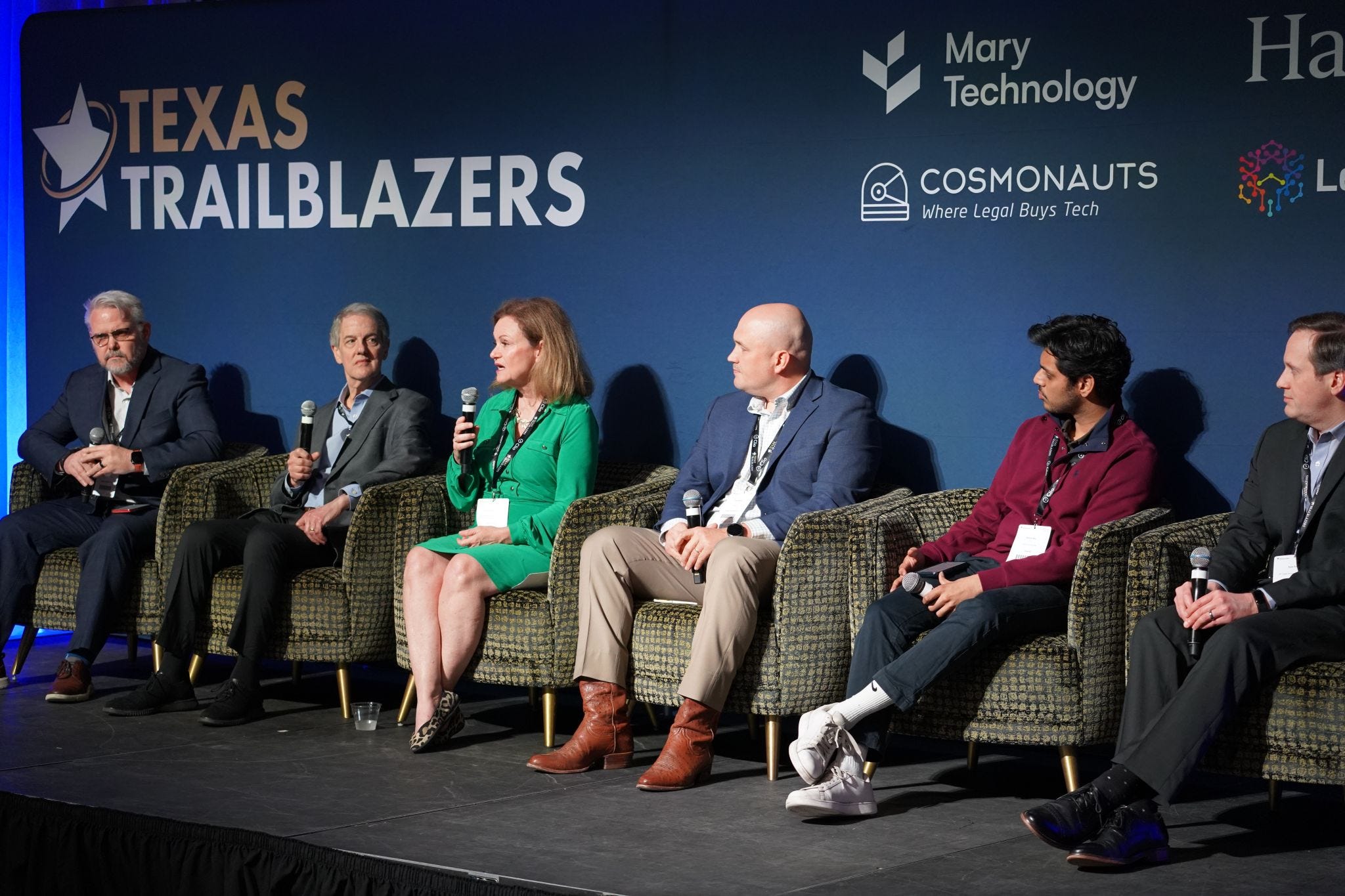
The panel on Culture, Change, and Collaboration brought together Emma Dowden of Burges Salmon, Thom Wisinski of Haynes Boone, Kelley Lugo of Bryan Cave Leighton Paisner, Rowan McNamee, and Tammy Covert of Nachawati. The discussion stayed focused on what actually drives adoption inside organizations.Continue Reading What I Took Away from Texas Trailblazers