For the Fourth of July week, we thought we’d do something fun and probably a little weird. Greg spoke with an AI guest named Justis for this episode. Justis, powered by OpenAI’s GPT-4, was able to have a natural conversation with Greg and provide insightful perspectives on the use of generative AI in the legal industry, specifically in law firms.

In the first part of their discussion, Justis gave an overview of the legal industry’s interest in and uncertainty around adopting generative AI. While many law firm leaders recognize its potential, some are unsure of how it fits into legal work or worry about risks. Justis pointed to examples of firms exploring AI and said letting lawyers experiment with the tools could help identify use cases.

Greg and Justis then discussed the challenges for the legal industry in using AI, like knowledge gaps, data issues, technology maturity, and managing change. They also talked about the upsides of using AI for tasks such as research, drafting, and review, including efficiency and cost benefits, as well as downsides like over-reliance on AI and ethical concerns.

The conversation turned to how AI could streamline law firm operations, with opportunities around scheduling, paperwork, billing, client insights, and more. However, Justis noted that human oversight is still critical. Justis and Greg also discussed how AI may impact legal jobs, creating demand for new skills and roles but aiming to augment human work rather than replace it.

Finally, Justis suggested innovations law firms could build with AI like research and drafting tools, analytics, dispute resolution systems, and project management. Justis emphasized that focusing on user needs, ethics, and change management will be key for successfully implementing AI. Looking ahead, Justis anticipated continuing progress in legal AI, regulatory changes, a focus on ethics, growing demand for AI skills, and AI becoming a competitive advantage for some firms.

While this was a “unique” episode for The Geek in Review, we hope it provided an insightful “conversation” about the current and future state of generative AI in the legal industry. There is significant promise but there are also challenges around managing change, addressing risks, and ensuring the responsible development of new AI tools. With the right focus and approach, law firms can start exploring ways to make the most of AI and gain a competitive edge. But they must make AI work for human professionals, not the other way around.

Listen on mobile platforms:  Apple Podcasts |  Spotify

Contact Us:

Twitter: ⁠⁠⁠⁠@gebauerm⁠⁠⁠⁠, or ⁠⁠⁠⁠@glambert⁠⁠⁠⁠
Voicemail: 713-487-7821
Email: geekinreviewpodcast@gmail.com
Music: ⁠⁠⁠⁠Jerry David DeCicca⁠⁠⁠

⁠⁠Transcript

Continue Reading A Literal Generative AI Discussion: How AI Could Reshape Law

This week we bring in Christian Lang, the CEO and founder of LEGA, a company that provides a secure platform for law firms and legal departments to safely implement and govern the use of large language models (LLMs) like Open AI’s GPT-4, Google’s Bard, and Anthropic’s Claude. Christian talks with us about why he started LEGA, the value LEGA provides to law firms and legal departments, the challenges around security, confidentiality, and other issues as LLMs become more widely used, and how LEGA helps solve those problems.

Christian started LEGA after gaining experience working with law firms through his previous company, Reynen Court. He saw an opportunity to give law firms a way to quickly implement and test LLMs while maintaining control and governance over data and compliance. LEGA provides a sandbox environment for law firms to explore different LLMs and AI tools to find use cases. The platform handles user management, policy enforcement, and auditing to give firms visibility into how the technologies are being used.

Christian believes law firms want to use technologies like LLMs but struggle with how to do so securely and in a compliant way. LEGA allows them to get started right away without a huge investment in time or money. The platform is also flexible enough to work with any model a firm wants to use. As law firms get comfortable, LEGA will allow them to scale successful use cases across the organization.

On the challenges law firms face, Christian points to Shadow IT as people will find ways to use the technologies with or without the firm’s permission. Firms need to provide good options to users or risk losing control and oversight. He also discusses the difficulty in training new lawyers as LLMs make some tasks too easy, the coming market efficiencies in legal services, and the strategic curation of knowledge that will still require human judgment.

Some potential use cases for law firms include live chatbots, document summarization, contract review, legal research, and market intelligence gathering. As models allow for more tailored data inputs, the use cases will expand further. Overall, Christian is excited for how LLMs and AI can transform the legal industry but emphasizes that strong governance and oversight are key to implementing them successfully.

https://open.spotify.com/episode/4c2MXnFuGxZ7XczuvNJP68?si=fT0SYJdLSoOztJIVR–H1w

Listen on mobile platforms:  Apple Podcasts |  Spotify
Contact Us:

Twitter: ⁠⁠⁠⁠@gebauerm⁠⁠⁠⁠, or ⁠⁠⁠⁠@glambert⁠⁠⁠⁠
Voicemail: 713-487-7821
Email: geekinreviewpodcast@gmail.com
Music: ⁠⁠⁠⁠Jerry David DeCicca⁠⁠⁠

⁠Transcript⁠

Continue Reading Christian Lang on Governing the Rise of LLMs: How LEGA Provides a Safe Space for Law Firms to Use AI (TGIR Ep. 206)

Many of us have wondered when the big two legal information providers would jump into the Generative AI game, and it looks like LexisNexis is going public first with the launch of Lexis+ AI. We sat down with Jeff Pfeifer, Chief Product Officer for UK, Ireland, Canada, and US, and discuss the launch and what it means for LexisNexis going forward.

Pfeifer discusses how LexisNexis+ AI offers conversational search, summarization, and drafting tools to help lawyers work more efficiently. The tools provide contextual, iterative search so users can refine and improve results. The drafting tools can help with tasks like writing client emails or advisory statements. The summarization features can summarize datasets like regulations, opinions, and complaints.

LexisNexis is working with leading AmLaw 50 firms in a commercial preview program to get feedback and input on the AI tools. LexisNexis also launched an AI Insider Program for any interested firms to learn about AI and how it may impact their business. There is definitely demand for the AI Insider Program with over 3,000 law firms already signed up.

Pfeifer emphasizes LexisNexis’ focus on responsible AI. They developed and follow a set of AI principles to guide their product development, including understanding the real-world impact, preventing bias, explaining how solutions work, ensuring human oversight and accountability, and protecting privacy.

Pfeifer predicts AI tools like LexisNexis Plus AI will increase access to legal services by allowing lawyers and firms to work more efficiently and take on more work. He also sees opportunities to use the tools to help pro se litigants and courts. However, he cautions that the responsible and ethical development and use of AI is crucial.

Overall, Pfeifer believes AI will greatly improve efficiency and capacity in the legal profession over the next 2-5 years but that responsible adoption of the technology is key.

Links:

Listen on mobile platforms:  Apple Podcasts LogoApple Podcasts |  Spotify LogoSpotify
Contact Us:

Twitter: ⁠⁠@gebauerm⁠⁠, or ⁠⁠@glambert⁠⁠
Voicemail: 713-487-7821
Email: geekinreviewpodcast@gmail.com
Music: ⁠⁠Jerry David DeCicca⁠

Transcript

Continue Reading LexisNexis Bets Big on AI Transforming the Legal Industry: Jeff Pfeifer on the Launch of Lexis+ AI (TGIR Ep. 203)

In this riveting episode of our podcast, we delve into the fascinating world of AI in the legal industry with our esteemed guests, Nathan Walter and Bridget Albiero. Walter, a former attorney and founder of BriefPoint.ai, has leveraged his legal expertise and passion for technology to automate the manual processes that often bog down law firms. Bridget Albiero, a User Experience (UX) and User Design (UD) expert, underscores the significance of intuitive design in making these AI tools not just effective, but user-friendly.

Nathan Walter has been instrumental in creating BriefPoint.ai, a tool designed specifically for lawyers to eliminate the mundane and time-consuming aspects of law practice. With the goals of automating the litigation process from response to appeal, Walter and Albeiro are focused on removing the mundane tasks, such as typing, from the process and allowing the attorneys to focus more on their legal experience and expertise over the grunt work that takes up too much of their time already.

However, the success of such tools is not solely dependent on their technical capabilities. Bridget Albiero’s role in UX and UD ensures that these AI systems are designed with the end user in mind. With the mission to make legal professionals’ lives much easier. Bridget’s work is critical in crafting an interface that enables lawyers to accomplish more work in less time, truly maximizing the benefits of AI integration.

Nathan and Bridget’s collaboration epitomizes the intersection of law and technology. They argue that the advent of AI tools, such as BriefPoint.ai, will invariably put pressure on law firms to rethink their traditional billing models. Nathan anticipates a shift towards contingency fee-based and flat fee billings, spurred on by the increased efficiency AI brings to the table. In addition, the ability for the plaintiff’s lawyers to reduce the overall amount of work that they need to put into each case, there will be more incentives to take on work that they might otherwise not consider. This has a multitude of effects ranging from flooding courts with more and more cases, to overwhelming defense firms and corporations with a much higher litigation matters, to making working at plaintiff’s firms more attractive to associates who don’t want to work the number of hours they would need to do in BigLaw firms.

Bridget also emphasizes the importance of approaching AI with a balanced perspective. While there are a number of positives when it comes to AI in the legal process, there are also downsides that need to be considered as well. Bridget and Nathan run through some of those issues as well. This thoughtful conversation with Nathan and Bridget offers a unique insight into the future of the legal industry, where AI and human ingenuity work hand in hand. Listen in to learn more about how these changes might soon be reshaping the legal landscape.

Listen on mobile platforms:  Apple Podcasts LogoApple Podcasts |  Spotify LogoSpotify

Twitter: ⁠⁠@gebauerm⁠⁠, or ⁠⁠@glambert⁠⁠
Voicemail: 713-487-7821
Email: geekinreviewpodcast@gmail.com
Music: ⁠⁠Jerry David DeCicca⁠

Transcript

Continue Reading Lawyer vs. AI or Lawyers + AI: Embracing the Future of Legal Practice with BriefPoint.ai’s Nathan Walter and Bridget Albiero (TGIR Ep. 202)

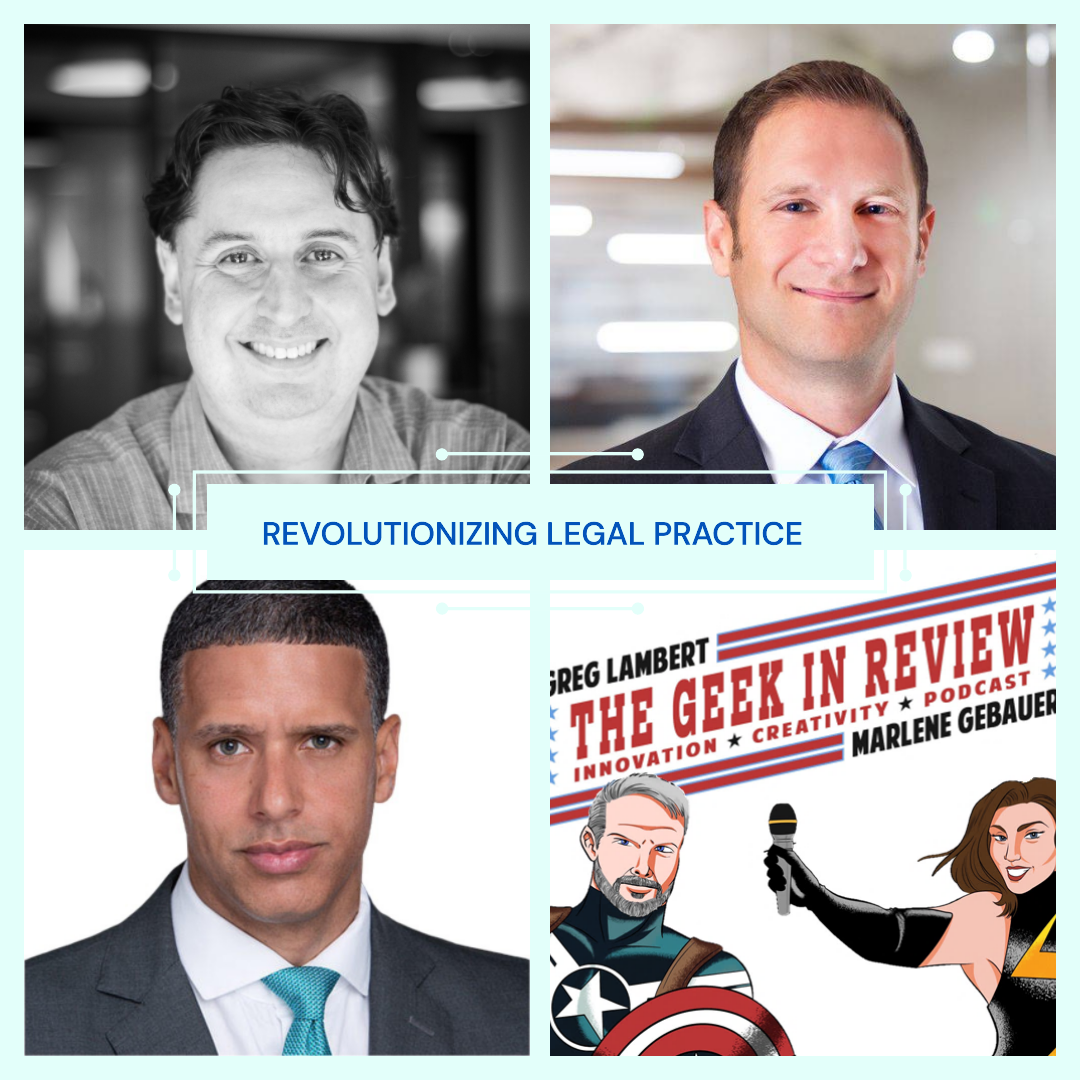
In this episode of “The Geek in Review,” hosts Greg Lambert and Marlene Gebauer engage in a fascinating conversation with legal technology experts Pablo Arredondo, Evan Shenkman, and Darth Vaughn. They discuss their proactive approach to incorporating AI technology, specifically CaseText’s CoCounsel, into their legal practice and business operations.

Pablo shares, “I think the law is such a fascinating space for this kind of AI because it really brings together two things that are really deep in the human experience, which is language and rules.” The guests discuss their experiences in using CoCounsel and its features, such as the ChatGPT feature, which enables them to draft and review documents more efficiently. Evan emphasizes, “The tools are there, and the more that we can sort of get folks up to speed on this stuff, and really help them understand how to use the tools, the better we’re all going to be.”

They explain how the integration of AI in their work has led to improved legal outcomes, happier clients, and better work-life balance for attorneys. Darth notes, “The legal industry tends to be a bit of a slow adopter of technology. It’s not because we’re not smart or we’re not hardworking. I think it’s because we’re risk-averse.”

Pablo, Evan, and Darth emphasize the importance of being passionate about leading the way in legal technology advancements. Pablo encourages listeners to embrace this technology with joy, rather than fear, to truly make a difference in their practice and industry. This positive approach helps them excel and bring others along on this transformative journey.

The discussion also touches on access to justice issues and how tools like CoCounsel can potentially help bridge the justice gap. By being intentional in utilizing AI technology to assist in pro bono cases, they believe it is possible to make a significant impact on improving access to legal services for those in need. Overall, this episode of “The Geek in Review” offers valuable insights into how AI and CaseText’s CoCounsel can revolutionize the legal industry. The guests’ passion and joy for embracing cutting-edge technology serve as an inspiration for others to follow suit and lead the way in transforming the legal landscape.

Listen on mobile platforms:  Apple Podcasts LogoApple Podcasts |  Spotify LogoSpotify

Contact Us:

Twitter: ⁠⁠@gebauerm⁠⁠, or ⁠⁠@glambert⁠⁠
Voicemail: 713-487-7821
Email: geekinreviewpodcast@gmail.com
Music: ⁠⁠Jerry David DeCicca⁠

Transcript

Continue Reading Revolutionizing Legal Practice: The Impact of CaseText’s CoCounsel on Law and Technology with Pablo Arredondo, Evan Shenkman, and Darth Vaughn (TGIR Ep. 199)

AI is now a significant part of the legal industry, and technology companies such as LexisNexis are at the forefront of this technology shift. We sat down and talked with Jeff Reihl, the Executive Vice President, and Chief Technology Officer at LexisNexis, and discussed the current state of AI and its relevance to the legal and research sector. The recent survey conducted by Lexis uncovered that 39% of lawyers, 46% of law students, and 45% of consumers agreed that generative AI tools will significantly transform the practice of law. During Reihl’s sixteen years at LexisNexis he witnessed many innovations such as the nearly universal adoption of iPhone and other mobile products, cloud computing, and document automation, but the speed a acceleration around Generative AI tool like GPT 4.0, Bing, Bard, and others is causing even the big players in the legal industry to quickly adjust to the demands of the market. Jeff highlighted the flexibility and benefits of LexisNexis’ technology, which can provide valuable insights and information to its users on-demand. The organization generates and applies AI-enabled insights that assist users in finding, evaluating, and curating content more quickly and effectively. Jeff went on to explain how AI technology is helping lawyers reduce research time and increase accuracy in creating legal documents. In conclusion, Jeff explained that LexisNexis is committed to promoting innovation in the legal field by utilizing innovative technology solutions to advance research and meet the growing research demand, thereby improving legal professionals’ efficiency and accuracy.

Of course, Lexis is not a new player in the AI field for the legal industry. They began using tools like Google’s BERT AI as early as 2018 and included AI functionality in many of their products on the backend of the resources. With the popularity of chatbot-like AI and the interaction that users are now demanding, it will require a shift in Lexis’ approach going forward. One focus that Reihl stresses, however, is that unlike the public AI chat tools, Lexis’ approach will take in the issues of privacy, security, citation of sources, and the ability to understand how their tools get to the results its users see. Less “black boxes” and more transparency is the goal.

Links:

Listen on mobile platforms:  Apple Podcasts LogoApple Podcasts |  Spotify LogoSpotify
Contact Us:

Twitter: ⁠⁠@gebauerm⁠⁠, or ⁠⁠@glambert⁠⁠
Voicemail: 713-487-7821
Email: geekinreviewpodcast@gmail.com
Music: ⁠⁠Jerry David DeCicca⁠

Transcript

Continue Reading The Future of AI within LexisNexis and the Legal Industry with Lexis CTO Jeff Reihl – TGIR Ep. 197

Benjamin Alarie and Abdi Aidid are legal experts who are heavily involved in the development of legal technology. They are releasing a new book, The Legal Singularity: How Artificial Intelligence Can Make Law Radically Better later this year. 
Benjamin Alarie is a tax law professor at the University of Toronto and has been in the tax law profession since 2004. He became interested in the future of legal education and how artificial intelligence will affect the profession, which led him to co-found Blue J, a legal technology company in Toronto. On the other hand, Abdi Aidid practiced as a commercial litigator in New York before becoming the Vice President of Legal Research at Blue J. He led the team of lawyers and research analysts and helped develop AI-informed predictive tools, which predict how future courts are likely to rule on new legal situations. Abdi is now a full-time law professor at the University of Toronto, teaching subjects like torts and civil procedure.
Naming the book “The Legal Singularity” is a big claim by the authors, so we asked them to explain what they meant by it. According to Abdi Aidid, the legal singularity is the practical elimination of legal uncertainty and its impact on our institutions and society. It is a future state where the law is unknowable in real time and on demand, and we can start doing things that we were not previously able to do because the law was either difficult to ascertain or we did not have a normative consensus around what the law ought to be. The concept of the legal singularity is related to the idea of a technological singularity, but it is not a totalizing event like the technological singularity. Instead, it is an equally socially important concept that focuses on how technological improvements affect the law and related institutions.
Alarie and Aidid suggest that the legal market needs to address bias in AI tools by keeping humans in the loop in arbitration and judicial contexts for a significant period of time. They believe that even as the legal singularity approaches and people begin to have confidence in algorithmic decision making, humans should still be involved in the process to audit machine-generated decisions. They argue that this is necessary because the law deals with deeply human questions, and there is more at stake than just ones and zeros. They believe that humans have to contribute to the legal system’s notions of mercy, fairness, empathy, and procedural justice. They also suggest that involving humans in the process helps to inform the technology before disastrous consequences and helps to refine it. Therefore, they emphasize the need for human review of machine judgments, which will lead to accelerated learning in the law. Furthermore, they highlight that the legal market needs to distinguish between the kinds of problems that are a reflection of unaddressed social problems or those that are new technological problems. They stress that the legal market is still collectively responsible for resolving these issues.

Listen on mobile platforms:  Apple Podcasts LogoApple Podcasts |  Spotify LogoSpotify
Transcript

Continue Reading The Legal Singularity and the Future of Legal Research – Benjamin Alarie and Abdi Aidid (TGIR Ep. 193)

This week we have Damien Riehl, VP, Litigation Workflow and Analytics Content at FastCase, and one of the drivers behind SALI (Standards Advancement for   for the Legal Industry.) Damien is definitely a “big thinker” when it comes to the benefits of creating and using standards for the legal industry. SALI is a system of tagging legal information to allow for better filtering and analysis. It works like Amazon’s product tags, where a user can search for a specific area of law, such as patent law, and then choose between various services such as advice, registration, transactional, dispute, or bankruptcy services. The tags cover everything from the substance of law to the business of law, with over 13,000 tags in the latest version. SALI is being adopted by major legal information providers such as Thomson Reuters, Lexis, Bloomberg, NetDocuments, and iManage, with each provider using the same standardized identifiers for legal work. With this standardization, it will be possible to perform the same API query across different providers and receive consistent results. Imagine the potential of being able to ask one question that is understood by all your database and external systems?
In that same vein, we expand our discussion to include how Artificial Intelligence tools like Large Language Models (i.e., ChatGPT, Google BARD, Meta’s LLM) could assist legal professionals in their quest to find information, create documents, and help outline legal processes and practices.
He proposed three ways of thinking about the work being done by these models, which are largely analogous to traditional methods. The first way is what Riehl refers to as a “bullshitter,” where a model generates information without providing citations for the information. The second way is called a “searcher,” where a model generates a legal brief, but does not provide citations, forcing the user to search for support. The third way is called a “researcher,” where the model finds relevant cases and statutes, extracts relevant propositions, and crafts a brief based on them.
Riehl believes that option three, being a researcher, is the most likely to win in the future, as it provides “ground truth” from the start. He cites Fastcase’s acquisition of Judicata as an example of how AI can be used to help with research by providing unique identifiers for every proposition and citation, enabling users to evaluate the credibility of the information. In conclusion, Riehl sees a future where AI is used to help researchers by providing a pick list of the most common propositions and citations, which can then be further evaluated by the researcher.
One thing is very clear, we are just at the beginning of a shift in how the legal industry processes information. Riehl’s one-two combination of SALI Standards combined with additional AI and human capabilities will create a divide amongst the bullshitters, the searchers, and the researchers.

Listen on mobile platforms:  Apple Podcasts LogoApple Podcasts |  Spotify LogoSpotify
Contact Us:
Twitter: @gebauerm, or @glambert
Voicemail: 713-487-7821
Email: geekinreviewpodcast@gmail.com
Transcript

Continue Reading The Bullshitter, The Searcher, and The Researcher – Damien Riehl on the Dynamic Shift in How the Legal Profession Will Leverage Standards and Artificial Intelligence

We hope that you like your Geek in Review with a little extra geekiness this week because we dive in with CaseText’s Chief Product Officer Pablo Arredondo on their innovative search tool, WeSearch.  This completely unique method of indexing texts into what Arredondo calls a “sublimely complex, 768-dimensional vector space”  creates a truly beautiful, and useful method of searching not just the words in the documents, but the concepts and meanings of those documents. Unlike the Artificial Intelligence tools many of us in the legal industry currently use, there’s no need to spend weeks or months training the system to understand the documents. The Neural Net techniques developed by the likes of Jacob Devlin, Google Researcher, and BERT author, allows the system to train itself, and the folks at CaseText have turned it loose to learn American case law.

While this new method of research opens many potential usages (and we brainstorm a few in the interview), but it also opens up some issues that aren’t unique to the legal industry, but are common in this industry. Issues such as acceptance of cloud-based utilities, what can and what cannot be accessed by the neural net tool, and perhaps the biggest issue we discuss, and that is the black box issue. Traditionally, when vendors provide search tools with AI and Natural Language Processing (NLP), there are Intellectual Property issues of the “Black Box” of the tool. While the methodology of how the system works is known by the vendor, just like the formula for Coke, it isn’t something they are willing to share. When it comes to this tool, the neural net and vectors work in ways that can be explained on a basic level, but after the system is trained, it begins functioning in a way that can’t be explained. This will be an issue that law librarians and academics may need to dive into in the not-so-distant future.

The WeSearch tool is available to test out. Let us know what you think.

Listen on mobile platforms:  Apple Podcasts LogoApple Podcasts | Overcast LogoOvercast | Spotify LogoSpotify

Information Inspirations

We’d all like to know what “The Future of the Law Firm Office” is going to be after we begin entering a post-pandemic workplace. Texas Lawbook’s Brooks Igo is hosting an upcoming webinar on May 11th which tackles that very topic.

Jae Um gives us ten questions we need to ask ourselves on how resilient our law firms are as we come out of COVID. Resiliency was a key factor in 2008, and it will be in 2021 as well.

Law firms might be different than corporations, but our clients have a Customer Experience (CX) with us whether we think about it or not. In a new podcast launched by Accenture called Built for Change, the inaugural episode discusses the importance of CX, and how some companies have successfully pivoted how their customers interact with them, and make that experience better.

Law firms have an issue with the “NONs”… only this time it is non-equity partners.

Listen, Subscribe, Comment
Please take the time to rate and review us on Apple Podcast. Contact us anytime by tweeting us at @gebauerm or @glambert. Or, you can call The Geek in Review hotline at 713-487-7270 and leave us a message. You can email us at geekinreviewpodcast@gmail.com. As always, the great music you hear on the podcast is from Jerry David DeCicca.
Transcript

Continue Reading The Geek in Review Ep. 114: Pablo Arredondo on CaseText’s New WeSearch Tool and How the Neural Net Is Making Its Way Into Legal Information