
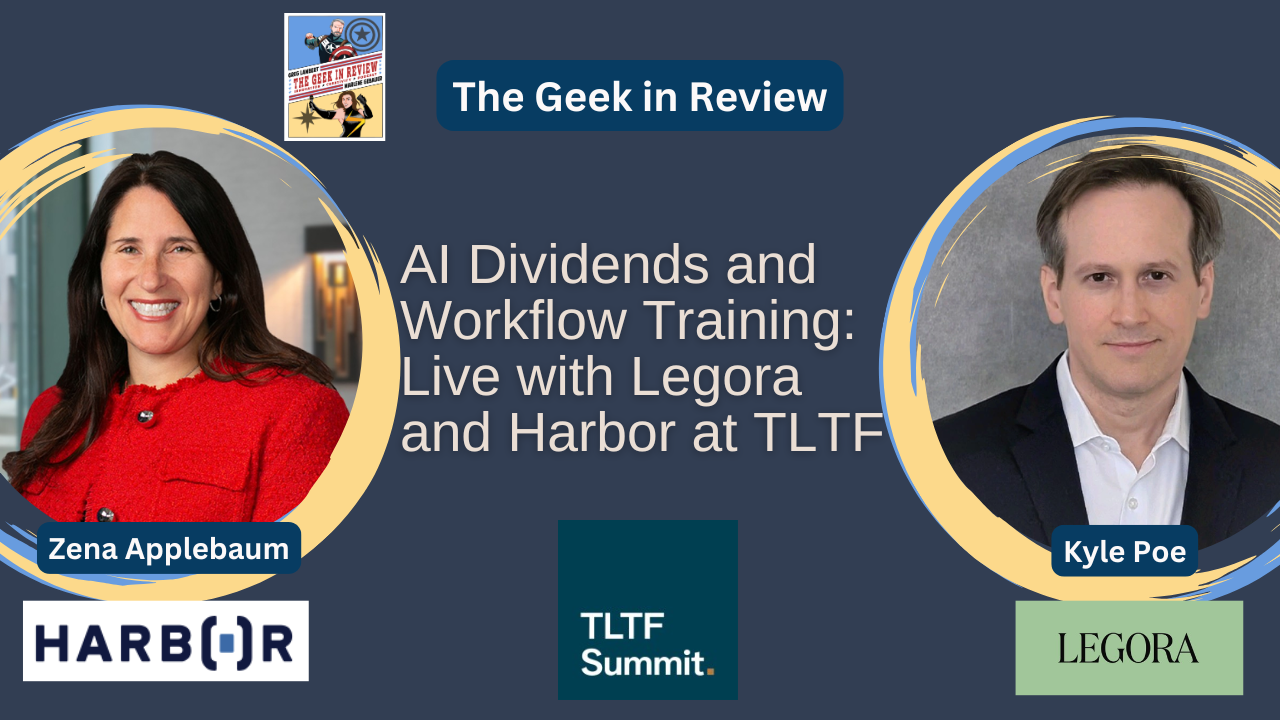
We recorded this episode live at the TLTF Summit and the energy in the room made it feel like the perfect place for a conversation about growth, training, and the rapid climb of legal tech. We grabbed our gear, claimed a corner in the podcast room, and pulled in two guests with front row seats to the changes hitting the industry. Joining us were Kyle Poe from Legora and our friend and guest host, Zena Applebaum of Harbor. The Summit attracts a focused group of founders, investors, and leaders, and the four of us jumped straight into what this event represents and what attendees hope to get from it.
Kyle had been on the job for only two months, but Legora moves at a pace that feels closer to dog years. In that short time the team doubled, a new round of funding closed, and the company introduced a major product release. Kyle walked us through Legora’s new Portal experience, which brings clients inside the legal workflow in a controlled, collaborative environment. Instead of long email chains and static work product, the Portal supports shared editing, direct review of diligence work, and a more responsive model for client engagement. In an era when clients expect quick turnarounds, this shift sets up a new dynamic for firms.
Zena added helpful perspective from her prior trips to TLTF. She described the Summit as a place that rewards conversation, curiosity, and hallway exchanges. It is also a place to study the different stages of the legal tech journey, from early ideas on the startup stage to the seasoned players on the scale stage. She also brought timely news of Harbor’s acquisition of Encore Technologies, a move that strengthens Harbor’s ability to support training and adoption workflows across firms and corporate legal teams. Her focus on education paired well with Kyle’s insights on how Legora approaches enablement through its team of legal engineers.
Training became the heart of the conversation. We compared old habits with the expectations of a generation of associates who have been taught to avoid AI until they enter a firm. Kyle stressed the need to anchor attorney training in real use cases and to give them early wins so they build trust in the tools. He described the shift from task-based training to workflow-based thinking. Zena echoed this point and highlighted the growing trend of firms reserving time for associates to explore AI tools as part of their professional development rather than treating experimentation as a side project squeezed between billable work.
We also talked about how AI is influencing both the pace and structure of client service. Kyle shared examples of how Legora uses prior work product to build integrated workflows, such as interrogatory response generators that pull from a full library of past responses. This not only speeds up production but also increases consistency and helps attorneys understand the reasoning behind revisions. Zena pushed the idea even further, noting that these systems give associates a chance to study the rationale behind changes in a way that human reviewers rarely have time to provide. This leads to better training and stronger validation of the final work product.
We closed with our crystal ball question. Kyle sees more adoption on the horizon but also anticipates uneven impacts across different practices as firms figure out how to adjust their business models. Zena pointed to the operational challenges ahead, especially the pressure to invest in data management and cloud infrastructure that supports true AI enablement. Her message was clear. If firms want the benefits later, they need to start organizing the foundations now. This episode blends optimism with realism, and it highlights the practical work ahead for firms, vendors, and everyone in between. Tune in for the full conversation and get ready for a lively discussion recorded right in the middle of the Summit buzz.
Listen on mobile platforms: Apple Podcasts | Spotify | YouTube
[Special Thanks to Legal Technology Hub for their sponsoring this episode.]
Email: geekinreviewpodcast@gmail.com
Music: Jerry David DeCicca
Transcript:
Continue Reading AI Dividends and Workflow Training: Live with Legora and Harbor at TLTF